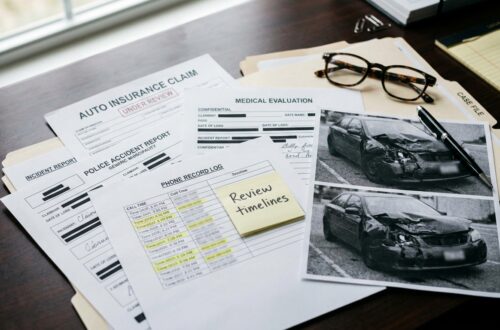
Insurance companies evaluate personal injury claims by investigating how an accident occurred, determining liability, reviewing medical evidence, calculating financial losses, and assessing the potential cost of resolving the dispute. Their goal is to determine whether a claim is covered and what compensation may be justified under the applicable policy and law.
Understanding this evaluation process can help injured individuals protect their interests, organize supporting evidence, and recognize when an insurance settlement offer deserves closer examination.
Quick Answer: How Do Insurance Companies Evaluate Injury Claims?
Insurance adjusters generally assess five major factors before recommending a settlement:
- Liability: Who caused the accident, and whether the injured person shares responsibility.
- Medical Evidence: The severity of the injuries, documented treatment, and connection to the accident.
- Economic Damages: Medical expenses, lost income, and other measurable financial losses.
- Non-Economic Damages: Pain, suffering, emotional distress, and reduced quality of life when legally recoverable.
- Insurance Coverage: Available policy limits, exclusions, and applicable coverage provisions.
An insurer may also consider the strength of the available evidence, disputed facts, applicable legal defenses, and the potential outcome of litigation.
What Happens After a Personal Injury Claim Is Filed?
The insurance evaluation process usually begins when an injured person or their representative notifies an insurance company about an accident.
The insurer opens a claim file, assigns a claims professional, and begins gathering information about the incident. Depending on the circumstances, the investigation may involve several stages before a settlement decision is reached.
Initial Claim Registration and Investigation
After receiving notice, an insurance company typically requests identifying information, accident details, and relevant supporting documents.
The initial investigation may include:
- Accident reports and incident descriptions.
- Photographs of property damage and injuries.
- Statements from drivers, witnesses, and other involved parties.
- Available surveillance or traffic-camera footage.
- Insurance policy information.
- Preliminary medical records and treatment documentation.
According to the National Association of Insurance Commissioners, insurance companies generally assign claims adjusters to investigate reported losses and determine appropriate payments under applicable coverage.
NAIC Content
The adjuster’s findings help establish whether additional investigation is necessary and which issues could affect settlement negotiations.
Reviewing Available Insurance Coverage
Before calculating a potential payment, the insurer must determine whether the policy provides coverage for the reported loss.
This review can involve checking whether the policy was active when the accident occurred, identifying applicable liability coverage, reviewing exclusions, and determining the available coverage limits.
A claim may involve more than one insurance policy. For example, a serious motor vehicle accident could raise questions about the at-fault driver’s liability coverage, supplemental uninsured or underinsured motorist protection, or other applicable policies.
Coverage questions matter because the value of an injury claim and the amount recoverable from a particular insurance policy are not necessarily the same.
How Do Insurance Companies Determine Liability?
Liability is one of the most important factors in evaluating personal injury claims. An insurer must assess whether the available evidence establishes that another party was legally responsible for the injuries.

In many negligence cases, the analysis considers whether someone owed a duty of care, breached that duty, and caused legally recognized harm.
Evidence Used to Establish Fault
Insurance investigators may examine several types of evidence to assess responsibility.
| Evidence Type | Role in Liability Evaluation |
| Police or Incident Reports | Documents reported circumstances and initial observations |
| Witness Statements | Provides independent accounts of the incident |
| Photographs and Videos | Helps establish physical conditions and accident sequences |
| Vehicle Damage | May help explain collision mechanics |
| Safety Records | May identify hazardous conditions or previous complaints |
| Expert Analysis | Helps explain technical questions involving accident reconstruction or causation |
No single piece of evidence automatically determines fault in every case. Insurance companies generally consider the available information collectively.
How Comparative Negligence Affects Claims in New York
New York follows a pure comparative negligence system.
Under New York Civil Practice Law and Rules Section 1411, an injured person’s share of responsibility generally reduces their recoverable damages proportionally rather than automatically preventing recovery.
For example, if the total legally recoverable damages are $100,000 and the injured person is determined to be 20% responsible, the damages would generally be reduced to $80,000.
Illustrative comparative negligence calculation
Total damages
$100,000
Claimant’s fault
20%
Adjusted damages
$80,000
Illustration only. Insurance coverage, legal defenses, and other applicable rules may affect actual recovery.
Because liability percentages can substantially affect compensation, disputed fault is often a central issue in personal injury negotiations.
How Do Insurance Companies Evaluate Medical Evidence?
Medical documentation helps insurers assess whether the reported injuries are connected to the accident and whether the claimed medical expenses are reasonable.
The evaluation is not limited to identifying a diagnosis. Adjusters also examine treatment history, functional limitations, expected recovery, and the consistency of the supporting records.
Injury Severity and Treatment History
Insurance companies commonly review:
- Emergency room and hospital records.
- Diagnostic imaging and laboratory findings.
- Physician evaluations and specialist reports.
- Physical therapy and rehabilitation records.
- Prescription medications and treatment plans.
- Surgical procedures and follow-up care.
- Medical opinions concerning long-term limitations.
Severe injuries may require substantial treatment, but the relationship between injury severity and settlement value is not always straightforward.
A medically documented injury that causes lasting limitations can affect several categories of damages, including future treatment needs and lost earning capacity.
Gaps in Medical Treatment
Adjusters may question a claim when medical records contain unexplained interruptions in treatment.
For example, an insurer might argue that a prolonged gap suggests the symptoms improved or were caused by an unrelated condition.
However, treatment interruptions can occur for legitimate reasons, including financial difficulties, transportation barriers, scheduling problems, or medical recommendations.
A gap does not automatically invalidate an injury claim. Its significance depends on the surrounding medical evidence and circumstances.
Pre-Existing Medical Conditions
Insurance companies may examine whether the injured person experienced similar symptoms or received treatment before the accident.
A pre-existing condition does not necessarily prevent compensation. If an accident aggravated an existing medical problem, the additional harm may be compensable when supported by evidence.
Medical opinions, prior treatment records, and diagnostic findings can help distinguish pre-existing symptoms from accident-related changes.
How Do Insurance Companies Calculate Personal Injury Settlement Values?
There is no universal formula that determines the settlement value of every personal injury claim.
Insurance companies generally assess the available damages evidence, the likelihood of establishing liability, insurance coverage, and the risks associated with litigation.
Economic Damages
Economic damages represent measurable financial losses caused by an injury.
Common examples include:
| Damage Category | Supporting Documentation |
| Past Medical Expenses | Medical bills, payment records, and treatment summaries |
| Future Medical Expenses | Physician opinions and projected treatment plans |
| Lost Wages | Pay records, employment statements, and tax documentation |
| Reduced Earning Capacity | Employment history and vocational or economic assessments |
| Rehabilitation Expenses | Therapy records and treatment invoices |
| Other Eligible Expenses | Receipts and documentation connecting costs to the injury |
The amount billed for treatment does not necessarily equal the amount ultimately recoverable. Medical necessity, causation, applicable law, and other factors may affect the damages analysis.
Non-Economic Damages
Non-economic damages address losses that do not have a straightforward financial measurement.
These may include physical pain, emotional suffering, loss of enjoyment of life, and interference with ordinary activities.
Insurers may evaluate these losses by considering the duration and severity of symptoms, medical findings, treatment history, and the impact of the injury on daily life.
Some claims assessments use internal valuation models or informal calculations as reference points. However, a multiplier applied to medical bills is not a legally mandated settlement formula.
Future Losses and Permanent Impairment
Claims involving serious or permanent injuries may require consideration of future losses.
For example, an individual who can no longer perform their previous occupation may experience diminished earning capacity over many years.
Similarly, a person requiring ongoing medical care may face substantial future expenses beyond their immediate treatment costs.
These projections often require detailed medical evidence and, in complex cases, assessments from qualified economic or vocational professionals.
The availability and amount of future damages depend on the evidence and applicable legal standards.
What Factors Can Reduce an Insurance Settlement Offer?
Even when an accident and injuries are documented, the insurer may dispute particular aspects of the claim.
Understanding common reasons for lower offers can help claimants identify which issues require further evidence.
Disputed Liability
If the insurance company believes its insured was only partially responsible, it may propose compensation based on that liability assessment.
An injured person may challenge an unsupported liability determination using witness testimony, accident reconstruction, photographs, or other relevant evidence.
Insufficient Medical Documentation
A settlement offer may be reduced when the records do not adequately establish the nature, duration, or accident-related cause of an injury.
Documentation becomes particularly important when claiming future medical treatment, permanent impairment, or substantial lost earning capacity.
Disagreement Over Injury Causation
The insurer may argue that some symptoms were caused by an earlier medical condition or a separate incident.
Medical evaluations and careful review of treatment chronology can help address these disputes.
Policy Limits
Insurance policies generally establish maximum amounts available under particular coverage provisions.
An injury claim may have a supported damages value exceeding the defendant’s available liability insurance.
In such situations, other potential insurance coverage and legally available sources of recovery may become important.
Statements and Inconsistent Evidence
Insurance companies may review statements made during the investigation, accident descriptions, and relevant publicly available information.
Inconsistencies between a claimant’s statements and documented activities can raise questions about the claimed limitations.
For this reason, accurate communication and consistent medical reporting are important throughout the claims process.
How Do Insurance Adjusters Decide Whether to Settle?
An insurance adjuster may consider more than the immediate cost of medical treatment.

Settlement evaluation can include the possibility of litigation, the strength of the evidence, potential defenses, the credibility of witnesses, and the financial exposure associated with an unfavorable court decision.
Assessing Litigation Risk
A case supported by credible witnesses, consistent medical documentation, and a clear liability theory may present different litigation risks from a claim involving conflicting evidence.
An insurer may also examine the costs of defending a lawsuit and the uncertainty associated with a trial.
However, litigation exposure does not mean an insurer must accept every settlement demand. Both parties may disagree about the probability of success and the amount of legally recoverable damages.
Reviewing Similar Claim Outcomes
Previous settlements and verdicts can provide context for evaluating a claim.
However, outcomes vary substantially based on injury severity, liability, medical evidence, jurisdiction, insurance coverage, and individual circumstances.
Published personal injury case results can illustrate how different disputes have been resolved, but they should not be treated as guaranteed settlement benchmarks.
Establishing Settlement Authority
Some adjusters can resolve claims within specified financial limits, while larger or more complex settlements may require additional review.
Supervisors, legal departments, and other authorized representatives may participate in settlement decisions.
This internal review process can affect negotiation timelines, particularly when liability is disputed or the requested compensation is substantial.
How Do Insurance Companies Handle Personal Injury Claims in New York?
New York insurers operate under state insurance requirements, including rules addressing claim investigation and unfair settlement practices.
The New York Department of Financial Services oversees insurance regulation and consumer protection within its jurisdiction.
Under New York’s Insurance Regulation 64, insurers generally must establish procedures to begin investigating covered claims within 15 business days after receiving notice, subject to applicable provisions and exceptions. That investigation standard does not mean every personal injury claim must be settled within 15 business days.
Justia+1
What Constitutes Unfair Claims Settlement Practices?
New York Insurance Law Section 2601 identifies practices that may constitute unfair claim settlement conduct when performed without just cause and with sufficient frequency to indicate a general business practice.
Examples include:
- Misrepresenting relevant policy provisions or facts.
- Failing to acknowledge pertinent claim communications promptly.
- Failing to adopt reasonable standards for investigating claims.
- Not attempting in good faith to reach fair settlements when liability has become reasonably clear.
- Compelling policyholders to pursue litigation through certain unreasonable settlement conduct.
These standards are outlined in New York Insurance Law Section 2601.
NYSenate.gov
A disagreement about settlement value does not automatically establish an unlawful insurance practice. The conduct must be assessed under the governing rules and the particular facts.
Understanding New York’s No-Fault Insurance System
Motor vehicle injury claims in New York can involve additional requirements because the state generally operates under a no-fault automobile insurance system.
Personal Injury Protection coverage may pay qualifying medical expenses and certain economic losses regardless of who caused the accident, subject to policy and statutory limitations.
Claims for non-economic damages arising from covered motor vehicle accidents generally require satisfaction of New York’s serious injury threshold, unless another statutory basis applies.
These rules can affect whether a claimant may pursue certain losses from an at-fault driver and how the insurance evaluation proceeds.
How Can Injured Individuals Strengthen an Insurance Claim?
An organized, evidence-based approach can help reduce avoidable disputes during the claims process.

Although every case is different, several practical steps can help preserve information that may become important in negotiations.
Maintain Complete Medical Records
Keep copies of medical evaluations, treatment recommendations, prescriptions, diagnostic findings, and follow-up records.
When symptoms change or new limitations develop, communicate those changes accurately to treating professionals.
Medical documentation helps establish the progression of an injury and the treatment received.
Preserve Accident Evidence
Photographs, witness contact information, incident reports, and relevant correspondence may become difficult to obtain as time passes.
Preserving available evidence early can help support the factual account of what happened.
Document Financial Losses
Keep employment records, invoices, receipts, and other documentation supporting claimed financial damages.
A clear record can make it easier to distinguish accident-related expenses from unrelated costs.
Review Settlement Offers Carefully
An initial settlement proposal may not account for every category of potentially recoverable loss.
Before accepting an offer, a claimant should understand whether the agreement includes a release of future claims and whether the available evidence adequately addresses ongoing medical or financial consequences.
Consider Legal Representation When Necessary
Complex personal injury disputes may involve contested liability, significant medical expenses, permanent impairments, or disagreements about insurance coverage.
Experienced personal injury attorneys can assess the available evidence, explain applicable legal rights, and assist with negotiations or litigation when appropriate.
Representation can be especially important when the legal issues extend beyond a straightforward insurance adjustment.
Can an Insurance Company Deny a Personal Injury Claim?
Yes. Insurance companies may deny claims when they determine that the available evidence does not establish liability, the claimed loss is excluded from coverage, or other relevant legal or contractual requirements have not been satisfied.
A denial does not necessarily mean the insurer’s position is correct.
Common Reasons for Claim Denials
Potential grounds for denial include insufficient liability evidence, disputed medical causation, policy exclusions, lack of applicable coverage, or failure to satisfy relevant procedural requirements.
Some denials involve genuine factual disagreements. Others may require a closer examination of the policy language and applicable law.
Understanding how insurance companies handle personal injury claims can help claimants recognize why a dispute has developed and what additional information may be useful.
What to Do After Receiving a Denial
A person who receives a denial should review the insurer’s written explanation and identify the specific reasons provided.
Depending on the circumstances, appropriate next steps may include gathering additional evidence, requesting clarification, pursuing an available review process, or consulting an attorney.
It is also important to distinguish deadlines established by an insurance policy from legal deadlines for filing a lawsuit.
How Long Do Insurance Companies Take to Evaluate Personal Injury Claims?
The time required to evaluate a claim depends on its complexity, the availability of evidence, and the injured person’s medical condition.
A relatively straightforward claim with clear liability and completed treatment may be evaluated more quickly than a dispute involving serious injuries, multiple defendants, or uncertain long-term medical needs.
Some investigations require additional expert opinions or detailed review of financial losses.
Why Serious Injury Claims May Take Longer
Severe injuries often involve ongoing treatment and uncertainty about future recovery.
If an individual’s long-term prognosis remains unclear, determining the complete extent of their damages may be difficult.
Although claimants should not unnecessarily delay protecting their rights, resolving a case before important medical information becomes available can create risks.
Does an Insurance Investigation Stop the Legal Filing Deadline?
No. Negotiating with an insurance company does not, by itself, suspend the applicable statute of limitations.
In New York, many ordinary negligence-based personal injury lawsuits are generally subject to a three-year statute of limitations under CPLR 214(5). Different deadlines can apply to other claims, including certain actions involving public entities or medical malpractice.
New York Courts+1
The New York Courts statute of limitations timetable provides general guidance on filing periods.
Because exceptions and special notice requirements can change the applicable deadline, injured individuals should identify the relevant time limits as early as possible.
Frequently Asked Questions
1. What is the most important factor in evaluating a personal injury claim?
Liability and the strength of the supporting evidence are fundamental considerations. Insurers also evaluate medical causation, injury severity, documented damages, and available coverage. A substantial injury does not automatically establish liability, while strong liability evidence does not eliminate the need to prove damages.
2. Do insurance companies use a formula to calculate pain and suffering?
Some insurers use internal evaluation tools or calculation methods to help assess non-economic damages. However, no universal formula determines the legal value of pain and suffering in New York personal injury cases. The circumstances of the injury, medical evidence, functional limitations, and applicable law remain important.
3. Can an insurance company offer less than the value of a claim?
Yes. An insurer may propose a settlement that is lower than the claimant’s assessment of their damages. Differences can arise from disputed liability, questions about medical causation, differing evaluations of future losses, or available insurance coverage. A settlement offer is a negotiating position rather than a final judicial determination.
4. Can pre-existing injuries affect a personal injury settlement?
Yes. Pre-existing medical conditions may affect the analysis of which symptoms and losses were caused by an accident. However, an accident that aggravates an existing condition may support compensation for the additional harm. The outcome depends on medical evidence and the applicable legal standards.
5. Should someone accept the first insurance settlement offer?
Not automatically. An initial offer should be evaluated against the documented damages, current medical information, future treatment needs, potential liability disputes, and the terms of any release. Once a settlement is finalized, the ability to pursue additional compensation for released claims may be limited or eliminated.
Conclusion
Insurance companies evaluate personal injury claims through a combination of liability investigation, medical review, financial analysis, and assessment of legal exposure. Each component can influence whether a claim is accepted, disputed, denied, or resolved through settlement.
Injured individuals can better protect their interests by preserving evidence, maintaining accurate medical and financial records, and understanding the reasons behind an insurer’s decision.
A well-supported claim does not guarantee a particular outcome, but it provides a stronger foundation for informed negotiations and appropriate legal action.