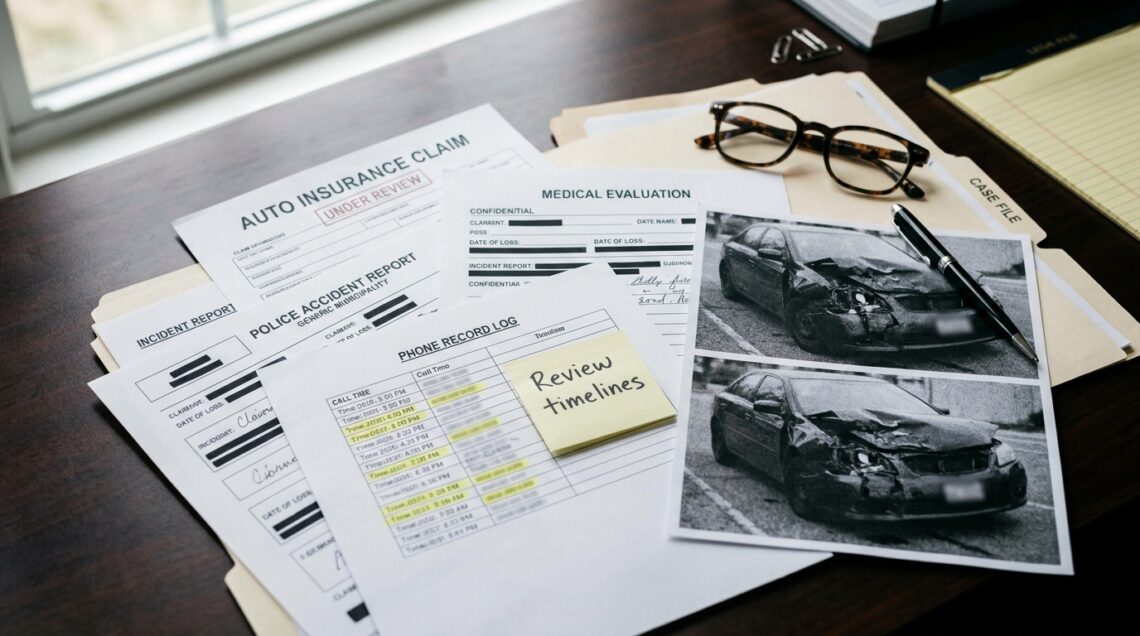
Distracted driving accident claims in New York often depend on proving that a driver was not paying full attention before a crash. Distraction may involve texting, handheld phone use, navigation apps, eating, passenger interaction, grooming, outside events, or other activities that take a driver’s attention away from the road. A car accident attorney resource can help explain how liability, evidence, no-fault benefits, medical records, insurance coverage, and damages are generally evaluated after a distracted driving crash.
Quick Answer
A distracted driving accident claim in New York usually requires evidence showing that a driver’s inattention contributed to the crash. Useful evidence may include the police report, witness statements, vehicle damage photos, dashcam footage, surveillance video, phone records, app data, traffic camera footage, medical records, no-fault documents, and proof of how the injury affected the person’s work and daily life. Distracted driving can affect fault, comparative negligence, settlement value, and whether additional records should be preserved early.
Key Takeaways
- Distracted driving can include phone use, texting, navigation apps, eating, drinking, talking to passengers, reaching for objects, or any activity that diverts attention from driving.
- NHTSA defines distracted driving as any activity that diverts attention from driving, including texting, phone use, eating, passenger interaction, or adjusting entertainment or navigation systems. NHTSA
- New York Vehicle and Traffic Law § 1225-c addresses mobile telephone use while driving, while § 1225-d addresses portable electronic device use while a vehicle is in motion. NYSenate.gov
- New York DMV’s MV-104 form states that crashes involving injury, death, or more than $1,000 in property damage to any one person must be reported within 10 days. NY DMV
- New York no-fault written notice generally must be submitted as soon as reasonably practicable, but no more than 30 days after the accident unless a clear and reasonable justification exists for late notice. Department of Financial Services
- Comparative fault can still be argued if the injured person is accused of contributing to the crash. NYSenate.gov
- Early evidence preservation matters because phone data, video footage, app records, witness memories, and vehicle data may disappear or become harder to obtain.
What Is Distracted Driving?
Distracted driving means a driver’s attention is pulled away from the task of driving. It is often associated with texting, but phone use is only one form of distraction. A driver may be distracted visually, manually, mentally, or through a combination of all three.
Common forms of distracted driving include:
- Texting while driving
- Holding a phone while driving
- Dialing a number
- Reading notifications
- Using social media
- Watching videos
- Adjusting GPS or navigation
- Eating or drinking
- Reaching for an object
- Talking to passengers
- Grooming
- Looking at something outside the vehicle
- Adjusting music or climate controls
- Managing children or pets in the vehicle
- Using work-related apps while driving
NHTSA explains that distracted driving includes any activity that diverts attention from driving, and its examples include talking or texting, eating and drinking, passenger interaction, and adjusting stereo, entertainment, or navigation systems. NHTSA
Why Distracted Driving Claims Are Often Disputed
Distracted driving can be difficult to prove because the distraction may happen seconds before impact. A driver may deny looking at a phone, claim the crash happened too quickly, blame traffic, or argue that another driver caused the collision.
Common disputes include:
- Whether the driver was using a phone
- Whether a text or call happened before the crash
- Whether the driver was looking at a navigation app
- Whether the driver was distracted by passengers
- Whether the driver reacted too late
- Whether the driver failed to brake
- Whether the driver drifted from a lane
- Whether a sudden stop or lane change caused the crash
- Whether both drivers share fault
- Whether the claimed injuries are connected to the crash
Because driver statements may conflict, physical evidence and digital evidence can be especially important.
New York Cell Phone and Portable Electronic Device Laws
New York law addresses several forms of device-related distracted driving. Vehicle and Traffic Law § 1225-c addresses mobile telephone use by drivers, and Vehicle and Traffic Law § 1225-d addresses portable electronic device use while a vehicle is in motion. NYSenate.gov
Portable electronic device issues may involve:
- Texting
- Reading texts
- Typing messages
- Browsing the internet
- Using apps
- Viewing images
- Taking photos
- Playing games
- Checking notifications
- Using handheld GPS or map features
- Watching video content
A traffic ticket or citation may help support a claim, but a personal injury claim still needs evidence of liability, injury causation, medical treatment, damages, and insurance coverage.
Distracted Driving Without a Phone
A distracted driving claim does not always require phone use. A driver may be distracted by something else inside or outside the vehicle.
Non-phone distractions may include:
- Eating while driving
- Drinking coffee
- Reaching for a dropped object
- Looking at a passenger
- Turning around to speak to children
- Adjusting mirrors
- Searching through a bag
- Reading paperwork
- Grooming
- Looking at a roadside event
- Adjusting the radio
- Handling a pet
- Using vehicle dashboard controls
NHTSA’s definition is broad because distraction is any activity that diverts attention from driving, not just texting or phone use. NHTSA
Common Accident Types Linked to Distracted Driving
Distracted driving can cause many types of crashes. The accident pattern may help reveal whether inattention was involved.
Common distracted driving crash types include:
- Rear-end collisions
- T-bone crashes
- Lane departure crashes
- Sideswipe collisions
- Pedestrian accidents
- Bicycle accidents
- Motorcycle crashes
- Work zone crashes
- Highway collisions
- Parking lot crashes
- Rideshare crashes
- Delivery vehicle accidents
- Multi-vehicle crashes
- Truck accidents
For example, a rear-end collision may suggest that the driver failed to notice stopped traffic. A lane departure crash may suggest the driver looked away or lost focus. An intersection crash may suggest the driver missed a red light, stop sign, pedestrian, or turning vehicle.
Common Injuries in Distracted Driving Accidents
Distracted driving crashes can cause minor, moderate, or severe injuries depending on vehicle speed, impact angle, seat position, safety features, and the injured person’s medical condition.
Common injuries may include:
- Neck injuries
- Back injuries
- Disc injuries
- Concussions
- Head injuries
- Shoulder injuries
- Knee injuries
- Wrist and hand injuries
- Fractures
- Nerve pain
- Soft tissue injuries
- Facial injuries
- Chest injuries
- Seat belt injuries
- Emotional distress
- Aggravation of pre-existing conditions
Medical care should be documented early because symptoms may worsen after the crash, and insurers may dispute injuries when treatment is delayed.
Why Medical Records Matter
Medical records are important because they help connect the crash to the injuries. They also show diagnosis, treatment, symptoms, restrictions, recovery progress, and future care needs.
Useful medical records may include:
- Ambulance records
- Emergency room records
- Hospital records
- Urgent care records
- Primary care records
- Orthopedic records
- Neurology records
- Imaging reports
- Physical therapy notes
- Chiropractic records
- Pain management records
- Prescription records
- Work restriction notes
- Surgery records
- Future care recommendations
A distracted driving claim may still be challenged if the medical file does not clearly show what injuries were reported and how treatment progressed after the accident.
No-Fault Benefits After a Distracted Driving Crash
New York no-fault benefits may cover certain economic losses after many motor vehicle accidents, regardless of who caused the crash. These benefits may include medical expenses, lost earnings, prescription costs, transportation to medical appointments, and certain other reasonable and necessary expenses.
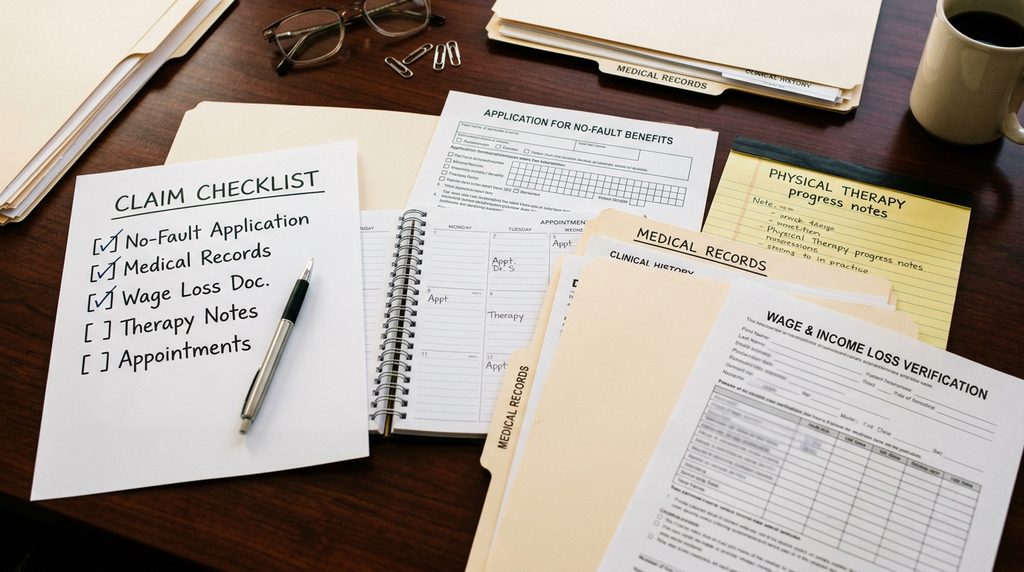
New York DFS explains that written no-fault notice should be filed as soon as reasonably practicable, but no more than 30 calendar days after the accident unless the injured person can provide written proof of a clear and reasonable justification for late filing. Department of Financial Services
No-fault benefits may cover:
- Emergency treatment
- Hospital bills
- Doctor visits
- Diagnostic testing
- Physical therapy
- Chiropractic care
- Prescription medication
- Lost earnings
- Transportation to medical care
- Certain reasonable and necessary expenses
A broader guide to the New York no-fault insurance system can help explain how first-party benefits, medical bill submissions, wage claims, and insurance timing may work after a crash.
No-Fault Benefits Are Separate From Fault Evidence
No-fault benefits may apply regardless of who caused the crash, but fault evidence still matters for a bodily injury claim. If the injured person seeks pain and suffering damages, liability evidence and serious injury evidence may become central.
Fault evidence may show:
- The other driver was texting.
- The other driver was using a handheld phone.
- The other driver failed to brake.
- The other driver ran a red light.
- The other driver drifted from the lane.
- The other driver failed to yield.
- The other driver struck stopped traffic.
- The other driver was looking away before impact.
No-fault benefits can help with certain economic losses, but they do not usually resolve the full injury claim.
Pain and Suffering After a Distracted Driving Accident
Pain and suffering generally refers to non-economic harm such as physical pain, emotional distress, reduced mobility, loss of normal activities, scarring, disability, or reduced quality of life.
In many New York motor vehicle claims, pain and suffering recovery requires proof of serious injury. Insurance Law § 5102 defines serious injury categories, including death, dismemberment, significant disfigurement, fracture, loss of fetus, permanent loss of use, permanent consequential limitation, significant limitation, and certain 90/180-day impairments. NYSenate.gov
Serious injury evidence may include:
- Fracture records
- MRI reports
- CT scans
- Surgery records
- Specialist evaluations
- Range-of-motion findings
- Therapy records
- Permanent limitation opinions
- Significant limitation documentation
- Scarring photos
- Work restriction notes
- Disability records
Distracted driving evidence may support fault, but medical evidence supports the injury and damages.
Evidence Needed in a Distracted Driving Claim
Distracted driving claims often require a combination of accident evidence, digital evidence, medical evidence, and insurance documents. A broader guide to evidence for personal injury claims can help explain why reports, photos, records, witness details, and medical documentation often need to support the same timeline.
Useful evidence may include:
- Police report
- DMV MV-104 report
- Photos of vehicle damage
- Scene photos
- Dashcam footage
- Surveillance video
- Traffic camera footage
- Witness statements
- Driver admissions
- Phone records
- App records
- Vehicle data
- Repair estimates
- Medical records
- Medical bills
- Work restriction notes
- Lost wage documents
- No-fault forms
- Insurance letters
- Social media evidence, when relevant
The strongest claim usually connects the driver’s distraction to the crash and the crash to the injuries.
Police Reports and DMV Reports
Police reports can help document the accident date, location, drivers, vehicles, insurance information, injuries, witness names, citations, statements, and apparent contributing factors.
New York DMV’s MV-104 crash report form states that crashes occurring in New York must be reported within 10 days when they cause a fatality, personal injury, or more than $1,000 in damage to the property of any one person. NY DMV
Useful report details may include:
- Driver statements
- Witness names
- Vehicle positions
- Damage descriptions
- Injury notation
- Citation information
- Roadway conditions
- Weather and lighting
- Officer narrative
- Crash diagram
- Apparent contributing factors
If the police report does not mention distraction, the claim may still use other evidence to prove it.
Phone Records and Digital Evidence
Phone records can become important when the injured person suspects texting, calling, app use, or other device activity contributed to the crash. However, phone records are not always easy to obtain without litigation tools or proper authorization.
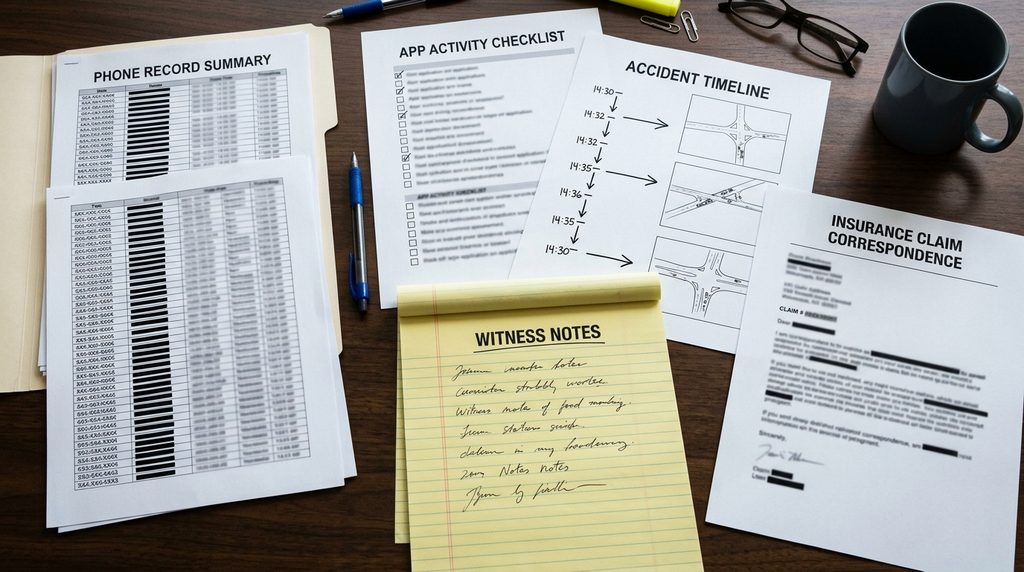
Phone-related evidence may include:
- Call logs
- Text message timing
- App activity
- Data usage records
- Navigation history
- Social media activity
- Bluetooth connection records
- Phone screenshots
- Vehicle infotainment data
- Driver admissions
- Witness observations
- Police officer notes
Phone records may show timing, but they may not always reveal the full content of a message. Other evidence may be needed to connect phone activity to the crash.
App, Navigation, and Rideshare Data
Distracted driving may involve apps beyond texting. Navigation apps, rideshare apps, delivery apps, social media apps, music apps, and messaging platforms may all play a role.
App-related evidence may include:
- GPS route data
- Delivery app logs
- Rideshare trip records
- Timestamped app activity
- Navigation entries
- Map search activity
- Driver status in an app
- Pickup or delivery timing
- In-app message records
- Location history
In rideshare or delivery cases, app data can also affect insurance coverage because coverage may depend on whether the driver was working, logged in, waiting for a request, or actively completing a ride or delivery.
Dashcam, Traffic Camera, and Surveillance Footage
Video footage can be powerful in a distracted driving claim because it may show the driver’s behavior before impact. It may also show lane drifting, delayed braking, failure to stop, traffic signal violations, or the crash sequence.
Potential video sources include:
- Dashcams
- Traffic cameras
- Highway cameras
- Business surveillance cameras
- Gas station cameras
- Parking lot cameras
- Doorbell cameras
- Rideshare vehicle cameras
- Delivery vehicle cameras
- Truck or bus cameras
- Nearby building security cameras
Video may be overwritten quickly. Preservation requests should be made as early as possible.
Witness Statements
Witnesses may see signs of distraction before or after the crash. A witness might notice a driver looking down, holding a phone, drifting from a lane, failing to brake, or admitting distraction after impact.
Witnesses may provide information about:
- Phone use
- Driver head position
- Driver looking down
- Vehicle drifting
- Lack of braking
- Delayed reaction
- Red-light violation
- Stop sign violation
- Erratic driving
- Driver admission after the crash
- Photos or video taken at the scene
Witness names, phone numbers, emails, and statements should be preserved quickly because memories may fade.
Vehicle Data and Event Information
Some vehicles contain electronic data that may help explain what happened before the crash. This data may show speed, braking, steering, seat belt use, throttle, or other vehicle information depending on the vehicle and available systems.
Vehicle-related evidence may include:
- Event data recorder information
- Infotainment system data
- Bluetooth connection information
- GPS records
- Airbag deployment data
- Brake application evidence
- Speed data
- Lane assistance records
- Vehicle camera footage
- Repair scan data
This evidence may require expert review and early preservation.
Distracted Driving in Rear-End Collisions
Rear-end crashes are often linked to distraction because a driver may fail to notice traffic slowing or stopping. However, the claim still needs evidence.
Rear-end distraction evidence may include:
- Lack of skid marks
- Driver admission
- Phone in driver’s hand
- Witness statement
- Dashcam footage
- Traffic camera video
- Vehicle damage
- Police citation
- Phone records
- Delayed braking data
The rear driver may argue that the front vehicle stopped suddenly or that another factor caused the crash. Evidence should address those arguments.
Distracted Driving in Intersection Crashes
Distracted driving can cause intersection crashes when a driver misses a red light, rolls through a stop sign, fails to yield, or does not notice a turning vehicle, pedestrian, bicyclist, or motorcyclist.
Intersection evidence may include:
- Traffic signal status
- Stop sign or yield sign location
- Witness statements
- Dashcam footage
- Traffic camera footage
- Vehicle damage pattern
- Intersection diagram
- Driver statements
- Phone records
- App activity
- Police citations
When both drivers claim they had the right of way, independent evidence can become especially important.
Distracted Driving and Pedestrian Accidents
Pedestrian accidents may involve distracted drivers who fail to notice crosswalks, traffic signals, pedestrians entering the road, or people walking near parking lots, driveways, or intersections.
Pedestrian claim evidence may include:
- Crosswalk photos
- Traffic signal evidence
- Witness statements
- Video footage
- Driver phone records
- Police report
- Scene photos
- Medical records
- Lighting and weather details
- Vehicle damage
- Driver statements
A pedestrian accident attorney resource may help explain why visibility, right of way, driver attention, and medical evidence often matter in these claims.
Distracted Driving and Bicycle or Motorcycle Accidents
Distracted drivers may fail to see bicyclists and motorcyclists because these road users are smaller than cars and may be harder to detect when a driver is not focused.
Useful evidence may include:
- Bicycle or motorcycle damage
- Helmet photos
- Clothing damage
- Lane position evidence
- Roadway photos
- Witness statements
- Dashcam footage
- Driver statements
- Phone records
- Medical records
- Insurance information
Distracted driving claims involving bicyclists or motorcyclists may also involve comparative fault arguments, so evidence preservation is important.
Distracted Driving and Commercial Vehicle Claims
Distracted driving crashes involving trucks, buses, delivery vans, taxis, rideshare vehicles, or company cars may involve more records than a standard passenger vehicle claim.
Commercial vehicle evidence may include:
- Driver qualification file
- Dispatch records
- GPS data
- Delivery schedule
- Electronic logging data
- Dashcam footage
- Company phone records
- App records
- Training records
- Company safety policies
- Maintenance records
- Commercial insurance policies
If the driver was working, employer liability, commercial coverage, and company-held evidence may need review.
Distracted Driving and Rideshare or Delivery Drivers
Rideshare and delivery drivers may use phones or apps for work. This can create distracted driving risks and insurance coverage questions.
Important questions may include:
- Was the driver logged into an app?
- Was the driver accepting a ride or delivery?
- Was the driver using navigation?
- Was the driver messaging through an app?
- Was a passenger in the vehicle?
- Was the driver between trips?
- Did personal auto insurance exclude commercial activity?
- Did rideshare or delivery coverage apply?
A distracted driving claim involving app-based work should review app records, trip data, insurance policies, and phone evidence.
Distracted Driving and Truck Accidents
Distracted truck driving can be especially dangerous because commercial trucks require longer stopping distances and can cause severe damage in a crash.
Truck distraction evidence may include:
- Dashcam footage
- Cab camera footage
- Electronic logging data
- Dispatch communications
- Phone records
- GPS data
- Company safety policies
- Driver training records
- Inspection records
- Maintenance records
- Delivery schedules
A truck accident attorney resource may help explain why commercial vehicle claims often require evidence beyond the police report.
Comparative Fault in Distracted Driving Claims
Comparative fault can affect a distracted driving claim if the injured person is accused of contributing to the crash. New York CPLR § 1411 provides that culpable conduct attributable to the claimant generally does not bar recovery, but damages are reduced in proportion to the claimant’s share of fault, subject to specific rules. NYSenate.gov
Comparative fault arguments may involve:
- Speeding
- Unsafe lane change
- Sudden stop
- Failure to yield
- Pedestrian crossing issues
- Bicycle lighting or lane use
- Motorcycle operation
- Following too closely
- Driving too fast for weather
- Distraction by more than one driver
A distracted driver may still be responsible, but fault allocation can affect settlement value.
Insurance Issues After a Distracted Driving Crash
Distracted driving claims may involve several types of insurance coverage. The correct coverage depends on the vehicles, drivers, ownership, employment status, injuries, policy limits, and available evidence.
Insurance issues may include:
- No-fault benefits
- Bodily injury liability coverage
- Property damage coverage
- SUM coverage
- Uninsured motorist coverage
- Commercial auto coverage
- Rideshare or delivery coverage
- Employer coverage
- Umbrella or excess policies
- Medical liens
- Health insurance coordination
- Policy limits
Insurance coverage should be reviewed early when injuries are serious or several parties may be responsible.
Policy Limits and Serious Injury Claims
Policy limits can affect practical recovery. A distracted driver may be clearly at fault, but the available insurance may be limited. Additional coverage sources may need to be reviewed when the injuries are serious.
Possible coverage sources may include:
- At-fault driver liability policy
- Vehicle owner policy
- Employer commercial policy
- Rideshare or delivery policy
- Excess or umbrella policy
- SUM coverage
- Household auto policy
- Uninsured motorist coverage
- MVAIC, when no other applicable insurance exists and eligibility rules are met
A strong claim review should identify every available coverage source before settlement.
Settlement Value in Distracted Driving Claims
Settlement value depends on liability, injury severity, medical evidence, insurance coverage, comparative fault, treatment history, lost wages, future care, and litigation risk.
Settlement factors may include:
- Proof of distraction
- Crash type
- Police report details
- Traffic citation
- Witness statements
- Video evidence
- Phone or app records
- Medical diagnosis
- Treatment duration
- Surgery or injections
- Work restrictions
- Lost income
- Future care needs
- Pain and suffering
- Serious injury evidence
- Policy limits
- Pre-existing conditions
- Comparative fault
Publicly available personal injury case results may provide general context, but every claim depends on its own facts, evidence, injuries, insurance coverage, and applicable law.
Common Insurance Company Arguments
Insurance companies may raise several arguments in distracted driving accident claims.
Common arguments include:
- There is no proof the driver was distracted.
- The phone records do not show use at the time of impact.
- The crash was caused by traffic, not distraction.
- The injured person was partly at fault.
- The injuries were pre-existing.
- The treatment was delayed.
- The medical records do not prove serious injury.
- The vehicle damage was minor.
- The injured person’s activities contradict the claim.
- The claimed lost wages are unsupported.
- The available policy limits are low.
A strong claim should respond with evidence, medical records, and a clear timeline.

Practical Distracted Driving Claim Review Chart
| Claim Issue | Why It Matters | Useful Evidence |
| Phone use | May show the driver was visually or manually distracted | Phone records, witness statements, police notes |
| App activity | May show navigation, rideshare, delivery, or messaging use | App logs, GPS records, trip data |
| Video evidence | May show delayed braking, lane drift, or traffic signal violations | Dashcam, surveillance, traffic camera footage |
| Medical causation | Connects injuries to the crash | ER records, imaging, therapy notes |
| No-fault benefits | Helps cover certain economic losses | No-fault forms, medical bills, wage records |
| Serious injury | May support pain and suffering recovery | Imaging, surgery notes, permanency opinions |
| Comparative fault | May reduce damages if fault is shared | Photos, video, traffic laws, statements |
| Insurance coverage | Affects practical recovery | Policy limits, SUM coverage, insurer letters |
Common Mistakes After a Distracted Driving Accident
Some mistakes can make a valid distracted driving claim harder to prove.
Common mistakes include:
- Not calling police
- Not reporting suspected phone use
- Not getting witness information
- Not preserving dashcam footage
- Not checking nearby cameras
- Waiting too long to seek medical care
- Missing no-fault notice deadlines
- Not reporting all symptoms
- Repairing the vehicle before documenting damage
- Not saving insurance letters
- Giving inconsistent statements
- Posting about the crash on social media
- Accepting an early settlement before medical care is clear
- Not preserving phone or app-related evidence
- Assuming a ticket is enough to prove the whole claim
The strongest claims usually combine accident evidence, medical documentation, insurance records, and early preservation of digital evidence.
How to Organize a Distracted Driving Claim File
A well-organized claim file can help explain liability, injuries, damages, and insurance issues.
Useful folders may include:
- Police report
- DMV MV-104 report
- Scene photos
- Vehicle damage photos
- Witness information
- Dashcam footage
- Surveillance footage requests
- Traffic camera information
- Phone record requests
- App evidence
- Medical records
- Medical bills
- Imaging reports
- Physical therapy records
- Work restriction notes
- Wage loss documents
- No-fault forms
- Insurance correspondence
- Policy documents
- Repair estimates
- Settlement offers
- Lien letters
Documents should be organized by date so the accident timeline and treatment history are easier to review.
Deadlines Still Matter
Distracted driving accident claims may involve several deadlines. These may include DMV crash reporting, no-fault notice, medical bill submissions, lost wage proof, SUM notice, public entity notice, policy notice, and lawsuit filing deadlines.
Important timing issues may include:
- MV-104 crash report timing
- No-fault written notice timing
- Medical bill submission timing
- Lost wage documentation
- Insurance policy notice
- SUM notice
- Public entity notice, if a government vehicle or public roadway issue is involved
- Lawsuit filing deadlines
- Discovery deadlines
- Settlement release timing
New York Courts lists three years for car accident claims and many negligence-based personal injury claims, but shorter insurance, no-fault, municipal, or policy notice deadlines may apply depending on the facts. New York Courts
When Legal Guidance May Be Useful
Legal guidance may be useful when distracted driving is suspected, the other driver denies phone use, video may disappear, phone records may be needed, serious injuries occurred, no-fault benefits are denied, the crash involved a commercial vehicle, app-based driver, pedestrian, bicyclist, motorcyclist, or multiple vehicles, or an early settlement offer arrives before treatment is complete.
A distracted driving claim review may require accident reports, scene photos, vehicle damage evidence, phone records, app data, witness statements, video footage, medical records, no-fault documents, insurance letters, repair estimates, wage records, policy documents, and settlement history.
People researching local support may review a Long Island injury law office when looking for motor vehicle accident claim information.
FAQs About Distracted Driving Accident Claims in New York
What counts as distracted driving in New York accident claims?
Distracted driving can include texting, handheld phone use, app use, navigation adjustments, eating, drinking, reaching for objects, talking to passengers, grooming, or any activity that takes attention away from driving.
How can distracted driving be proven after a crash?
Distracted driving may be proven through police reports, witness statements, phone records, app data, dashcam footage, traffic camera video, surveillance footage, vehicle data, driver admissions, and crash patterns such as delayed braking or lane drifting.
Does no-fault insurance apply after a distracted driving accident?
No-fault benefits may apply after many New York motor vehicle accidents regardless of who caused the crash. Written no-fault notice generally must be filed no more than 30 calendar days after the accident unless there is a clear and reasonable justification for late filing. Department of Financial Services
Can a distracted driving claim include pain and suffering?
Yes, but many New York motor vehicle pain and suffering claims require proof of serious injury. Medical records, imaging, surgery notes, therapy records, permanency opinions, and work restrictions may help support that part of the claim.
Can both drivers share fault in a distracted driving crash?
Yes. Comparative fault may apply if both drivers contributed to the crash. For example, one driver may have been texting while another was speeding, changing lanes unsafely, or failing to yield.
Final Thoughts
Distracted driving accident claims in New York require careful evidence review because distraction may last only seconds and may not be obvious after the crash. A strong claim usually depends on early documentation, witness information, phone or app evidence, video preservation, medical records, no-fault paperwork, insurance review, and a clear timeline showing how driver inattention caused the crash and how the injuries affected the person’s health, work, and daily life.