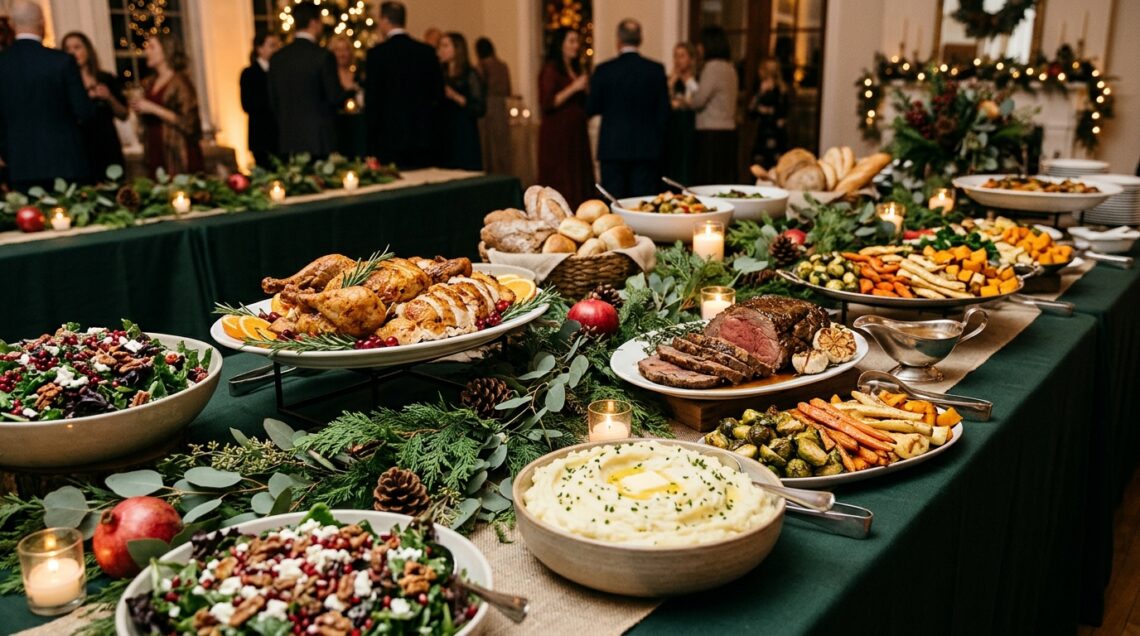
Holiday gatherings bring families, friends, colleagues, and communities together, and food is often an important part of these celebrations. Planning the right catering menu can make hosting easier while ensuring guests have enjoyable meal options. From traditional holiday entrees and seasonal side dishes to desserts and beverages, a well-organized menu helps create a welcoming dining experience.
Holiday catering requires more than selecting popular dishes. Hosts need to consider the occasion, guest count, budget, dietary requirements, serving arrangements, and event schedule. A family celebration may call for a relaxed buffet, while a corporate holiday gathering might benefit from individually packaged meals or a more formal plated dinner.
Understanding these planning considerations helps hosts organize holiday meals without overlooking important details. Whether arranging a small family gathering or a larger seasonal celebration, thoughtful catering decisions can make the occasion more enjoyable for everyone.
Key Takeaways
- Holiday catering menus should reflect the occasion, guest preferences, and event format.
- Traditional entrees, seasonal side dishes, appetizers, and desserts help create a complete holiday meal.
- Accurate guest counts and portion estimates help manage food quantities and costs.
- Dietary requirements and food allergies should be addressed before finalizing the menu.
- Buffet, plated, and individually packaged meals suit different holiday gatherings.
- Advance ordering and clear delivery arrangements help reduce last-minute complications.
- A balanced catering budget should account for food, packaging, transportation, and service requirements.
Why Is Catering a Practical Choice for Holiday Gatherings?
Holiday celebrations often involve several responsibilities, including organizing guests, arranging decorations, preparing the venue, and coordinating activities. Preparing every dish independently can add considerable work, particularly when hosting a large group.
Restaurant catering provides an alternative by allowing hosts to arrange prepared meals and supporting food options through a catering provider.
Several advantages make catering useful for seasonal celebrations.
- Reduced Preparation Work: Hosts can spend less time preparing multiple dishes.
- Menu Variety: Restaurant catering may provide different entrees, sides, appetizers, and desserts.
- Flexible Arrangements: Food can be organized through buffet service, plated meals, or individual packages.
- Group Convenience: Catering makes it easier to arrange meals for larger gatherings.
- More Time for Guests: Hosts can focus on welcoming visitors and participating in the celebration.
The most suitable arrangement depends on the event’s size, budget, location, and available catering options.
What Foods Should You Include in a Holiday Catering Menu?
A successful holiday menu combines familiar favorites with enough variety to accommodate different tastes. The specific dishes depend on the celebration, cultural traditions, and preferences of the guests.
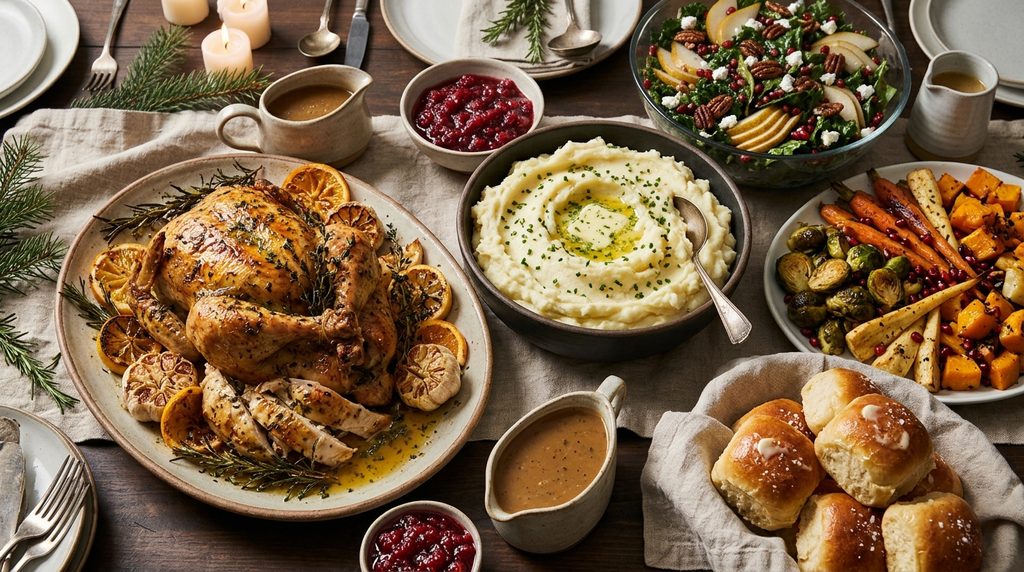
Rather than offering too many unrelated options, focus on building a menu with complementary entrees, sides, appetizers, and desserts.
Traditional Holiday Main Courses
Main courses are usually the centerpiece of a holiday meal. Hosts should select entrees that suit the occasion and can be prepared and served efficiently.
Popular catering options include:
- Roasted or grilled chicken.
- Baked turkey.
- Beef entrees.
- Baked ham.
- Pasta dishes.
- Rice-based meals.
- Vegetarian main courses.
For larger gatherings, offering two different entree options can accommodate more preferences without making the menu unnecessarily complicated.
Seasonal Side Dishes
Side dishes complement the main course and provide additional variety. Seasonal ingredients can also help give a holiday menu a distinctive character.
Common choices include:
| Side Dish | How It Complements the Meal |
| Mashed potatoes | Provide a familiar, creamy accompaniment |
| Roasted vegetables | Add color, texture, and savory flavor |
| Rice dishes | Offer a versatile accompaniment to meat and vegetable entrees |
| Fresh salads | Provide a lighter alternative |
| Stuffing | Complements traditional holiday entrees |
| Dinner rolls | Offer a simple addition to the main meal |
| Pasta salads | Work well for casual gatherings and buffet arrangements |
The selection should reflect the main courses and the type of event being organized.
Holiday Appetizers
Appetizers give guests something to enjoy before the main meal. They can be particularly useful when an event includes a reception period or a gap between guest arrival and dinner service.
Suitable options include:
- Small sandwiches and wraps.
- Vegetable platters.
- Cheese and cracker selections.
- Bite-sized chicken dishes.
- Stuffed vegetables.
- Savory pastries.
Choose appetizers that are convenient to serve and do not require complicated preparation at the event venue.
Desserts and Sweet Treats
Desserts add a finishing touch to holiday meals. Traditional favorites can create a familiar experience, while a selection of different sweets gives guests more choice.
Popular catering desserts include:
- Cakes and cupcakes.
- Cookies and brownies.
- Fruit-based desserts.
- Pies and pastries.
- Puddings.
- Assorted dessert platters.
For celebrations involving children and adults, a small variety of desserts can make the menu more appealing.
How to Plan Catering for Different Holiday Events
Not every holiday gathering requires the same menu or service arrangement. The occasion should influence food selection, presentation, and the overall catering setup.
Family Holiday Gatherings
Family celebrations often include guests from different generations with varying food preferences. A flexible menu with familiar entrees, vegetables, sides, and desserts can make meal planning easier.
Buffet catering is often practical for these occasions because guests can select their preferred combinations and serving quantities.
Hosts should also consider:
- Children’s food preferences.
- Seating arrangements for older relatives.
- Suitable serving quantities.
- Space for shared dishes.
- Dietary restrictions within the family.
Corporate Holiday Parties
Corporate celebrations often require catering that accommodates employees, guests, and business associates.
The menu should be convenient to distribute and appropriate for the event’s atmosphere. Depending on the schedule, options may include buffet meals, plated dinners, or individually packaged food.
For corporate gatherings, consider:
- The number of attendees.
- The available dining space.
- Whether the event includes speeches or presentations.
- The time allocated for eating.
- Dietary preferences and food allergies.
- Cleanup and serving arrangements.
Community Holiday Events
Community celebrations may involve larger guest numbers and a broader range of food preferences. Practical menu choices and efficient distribution are particularly important.
Buffet arrangements, shared serving stations, and individually packaged meals can all work depending on the venue and event structure.
Holiday Office Lunches
Office holiday lunches are generally shorter and may take place during working hours. Food should be easy to distribute and convenient to eat within the available break period.
Sandwiches, wraps, pasta meals, salads, and individually packaged entrees can be suitable choices.
Holiday Dinner Celebrations
Dinner events may allow more time for a complete dining experience. Hosts can consider appetizers, multiple entree choices, side dishes, and desserts.
For formal gatherings, plated catering can provide a more organized serving arrangement.
How Much Food Should You Order for a Holiday Event?
Estimating food quantities is an important part of holiday catering. Ordering too little can leave guests without enough food, while excessive quantities may increase costs and create unnecessary waste.
Start by confirming the expected number of attendees and identifying whether the event includes a full meal, light refreshments, or multiple food service periods.
The following framework can help organize the order.
| Food Category | Planning Consideration |
| Main courses | Plan appropriate servings for the confirmed guest count |
| Side dishes | Allow for guests choosing different combinations |
| Appetizers | Adjust quantities according to event duration and meal timing |
| Salads | Consider whether they are light sides or substantial meal components |
| Desserts | Estimate demand based on the number of guests and available options |
| Beverages | Account for event duration, temperature, and guest preferences |
Consider Guest Preferences and Appetite
Guest count alone does not determine the required quantity. Children, adults, and guests with different appetites may consume different amounts.
The menu itself also matters. A substantial meal with several entrees and sides may require different quantities than a lighter lunch.
Account for Event Duration
A short holiday lunch may require one coordinated meal, while a celebration lasting several hours may need refreshments or additional food service.
Confirm Portions With the Restaurant
Catering providers can recommend serving quantities based on their actual recipes, portion sizes, and menu combinations.
Discuss these details before confirming the final order rather than relying entirely on general estimates.
How to Accommodate Dietary Requirements During Holiday Catering
Holiday gatherings often bring together people with different dietary preferences and restrictions. Planning for these requirements helps make the event more inclusive and reduces the risk of guests being unable to enjoy the meal.
Identify Dietary Needs Early
Ask guests to communicate relevant dietary requirements before the menu is finalized.
Common considerations include:
- Vegetarian preferences.
- Vegan preferences.
- Gluten-free requirements.
- Dairy allergies or intolerance.
- Nut allergies.
- Religious dietary requirements.
- Other medically necessary food restrictions.
Confirm Ingredients With the Catering Provider
Menu descriptions may not identify every ingredient used in sauces, seasonings, dressings, or prepared dishes.
Ask the restaurant about:
- Ingredients in main courses and side dishes.
- Dairy, wheat, nuts, and other relevant allergens.
- Broth and stock ingredients.
- Food preparation and shared equipment.
- Cross-contact prevention procedures.
- Available substitutions.
For serious food allergies, confirming preparation procedures is particularly important. A dish should not be described as allergen-free unless the catering provider can substantiate that claim.
Arrange Separate Meals When Necessary
Some guests may need individual meals prepared according to specific requirements.
Clearly identifying these meals and discussing separate packaging or serving arrangements with the restaurant can help prevent confusion during the event.
Which Catering Service Style Works Best for Holiday Celebrations?
The serving format influences the atmosphere, convenience, and organization of a holiday event. Buffet, plated, and individually packaged catering each offer different advantages.
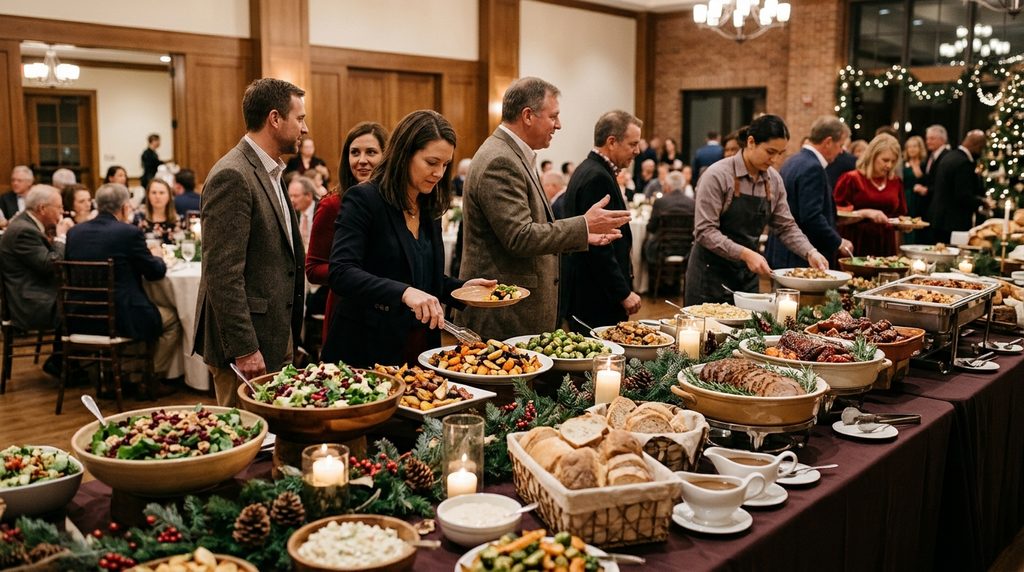
Buffet Catering
Guests select their own food from shared serving stations. This arrangement works well for family gatherings, office celebrations, and informal holiday parties where menu flexibility is important.
Plated Catering
Individual meals are portioned and served to guests. This approach is suitable for formal holiday dinners, organized celebrations, and events with structured schedules.
Individually Packaged Catering
Each guest receives a separate meal package. This option is useful for office lunches, conferences, and gatherings where quick distribution is important.
How to Choose the Right Service Format
| Event Type | Suitable Catering Arrangement |
| Family holiday dinner | Buffet or plated service |
| Corporate holiday party | Buffet or plated service |
| Office holiday lunch | Individually packaged meals |
| Community celebration | Buffet or packaged meals |
| Formal holiday gathering | Plated service |
| Informal seasonal party | Buffet service |
The final decision should account for the venue, available staff, guest mobility, serving equipment, and event schedule.
How to Organize a Holiday Catering Budget
Holiday celebrations can involve several expenses beyond the food itself. Establishing a budget before selecting the menu helps hosts make practical decisions and avoid unexpected costs.
Start by determining the total catering allowance and dividing it by the expected number of guests.
For example, a $1,500 budget for 60 guests provides a planning allowance of $25 per person. This is an illustrative calculation, not a standard catering price.
Consider the following cost categories:
| Expense | Budget Consideration |
| Main courses | Ingredients, preparation, and serving quantities |
| Side dishes | Number of selections and required portions |
| Appetizers | Additional food before the main meal |
| Desserts | Variety and serving quantities |
| Beverages | Water, soft drinks, coffee, and other drinks |
| Packaging | Individual containers and serving materials |
| Delivery | Transportation and delivery fees |
| Staffing | Setup, serving, and cleanup requirements |
| Equipment | Tables, utensils, serving trays, and other supplies |
Prioritize Essential Menu Items
Allocate enough of the budget to the main meal before adding optional extras. A smaller selection of well-planned dishes can be more practical than a large menu that exceeds the available budget.
Choose Complementary Dishes
Select entrees and sides that work together. This can provide menu variety without requiring numerous unrelated dishes.
Confirm Additional Charges
Ask the catering provider for a complete cost breakdown, including delivery, setup, service charges, taxes, and equipment requirements.
How to Coordinate Holiday Food Delivery and Setup
Food transportation and event preparation can influence the quality of a catered meal. This is especially important when the restaurant prepares food at a separate location and delivers it to the venue.
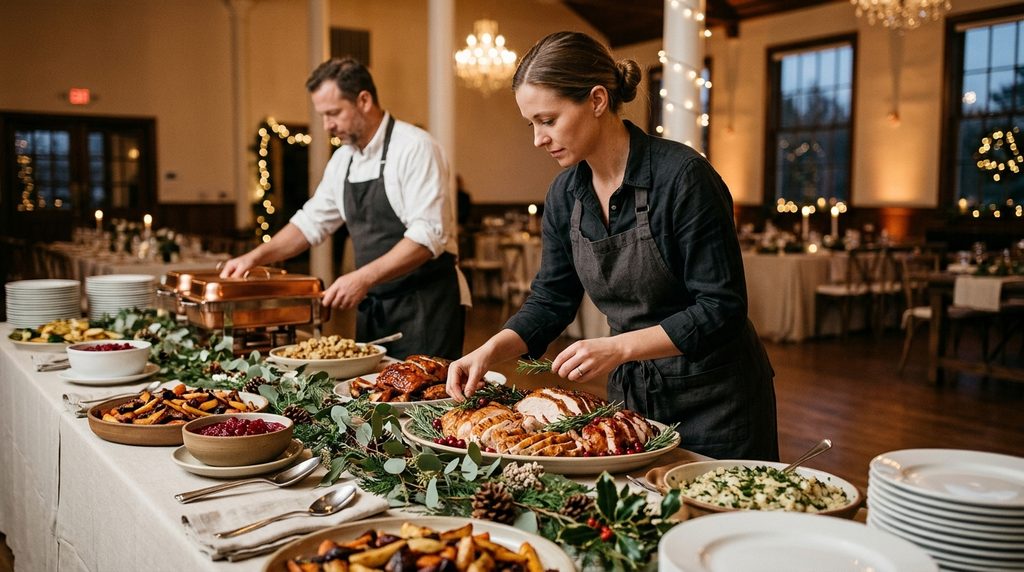
Confirm Delivery Times
Establish a delivery schedule that allows enough time for food setup before guests begin eating.
Confirm the following details:
- Event date and delivery time.
- Complete venue address.
- Contact person at the venue.
- Entrance and unloading arrangements.
- Food setup requirements.
- Any restrictions on delivery access.
Consider Food Packaging
Different dishes require different packaging arrangements. Sauces and liquid-based dishes need secure containers, while crispy foods may require packaging that limits trapped moisture.
Appropriate packaging should protect food during transportation and make distribution convenient.
Maintain Safe Food Temperatures
Food safety is particularly important during holiday gatherings, when meals may remain available for extended periods.
According to USDA guidance, cold foods should generally be kept at 40°F or below, while hot foods should be maintained at 140°F or above during holding.
Hosts should coordinate appropriate storage, transportation, and serving arrangements with the catering provider.
Prepare the Serving Area
Before delivery, ensure the venue has sufficient space and equipment for the selected service style.
Depending on the arrangement, this may include:
- Serving tables.
- Plates and cutlery.
- Napkins.
- Serving spoons and tongs.
- Beverage stations.
- Waste disposal arrangements.
- Appropriate food-holding equipment.
Preparing these details beforehand helps the serving process run more smoothly.
How to Make a Holiday Catering Menu More Memorable
A memorable holiday menu does not necessarily require expensive ingredients or an unusually large selection of dishes. Thoughtful combinations, recognizable favorites, and appropriate presentation can make a gathering more enjoyable.
Several approaches can help create a distinctive menu.
Include Familiar Holiday Favorites
Traditional dishes can give guests a sense of familiarity and make the meal feel connected to the occasion.
Hosts can include established family favorites or popular seasonal preparations while introducing a few additional options.
Offer Seasonal Ingredients
Seasonal vegetables, fruits, and other ingredients can add variety to holiday menus. Their availability and suitability depend on the location, time of year, and restaurant’s sourcing practices.
Balance Rich and Light Dishes
A menu containing only heavy entrees and sides may feel repetitive. Including salads, vegetables, and lighter accompaniments can provide more variety.
Pay Attention to Presentation
Food presentation influences how guests experience a catered meal. Organized serving trays, clearly identified dishes, and appropriate serving arrangements can make the catering setup more inviting.
Provide Suitable Beverage Options
Beverages are another part of holiday catering that should not be overlooked.
Depending on the event, suitable options may include:
- Bottled water.
- Soft drinks.
- Fruit beverages.
- Coffee.
- Tea.
- Seasonal nonalcoholic refreshments.
Consider the event duration, guest count, and available budget when estimating beverage quantities.
When Should You Book Holiday Catering?
Holiday periods can create increased demand for restaurant catering services. Waiting until the last minute may limit menu choices, delivery availability, and the ability to accommodate larger groups.
The appropriate booking timeline depends on the event size and restaurant capacity.
A practical planning schedule can look like this:
| Planning Stage | Recommended Activity |
| Initial planning | Establish event date, budget, venue, and approximate guest count |
| Early coordination | Research catering providers and review available menus |
| Menu selection | Choose entrees, sides, desserts, and service arrangements |
| Order confirmation | Confirm quantities, dietary requirements, and pricing |
| Final preparation | Reconfirm guest count, delivery instructions, and venue access |
| Event day | Prepare serving areas and coordinate food delivery |
For larger celebrations, begin discussions well in advance and follow the restaurant’s booking deadlines.
When finalizing an order, ask about cancellation policies, payment schedules, changes to guest numbers, and any minimum-order requirements.
How to Choose a Restaurant for Holiday Catering
Selecting the right catering provider is an important part of organizing a successful celebration. A restaurant should be able to accommodate the event’s menu requirements, guest count, schedule, and budget.
Before making a decision, evaluate these factors:
- Menu Variety: Does the restaurant offer appropriate entrees, sides, appetizers, and desserts?
- Group Capacity: Can it prepare the required number of servings?
- Food Quality: Does it maintain consistent preparation standards?
- Customization: Can it accommodate reasonable menu adjustments?
- Dietary Information: Can staff explain ingredients and preparation procedures?
- Delivery Arrangements: Does the restaurant offer suitable transportation and setup options?
- Pricing Transparency: Are additional fees and service charges clearly explained?
- Communication: Is there a reliable process for confirming and updating orders?
Customers exploring holiday catering can review available restaurant catering options when planning seasonal celebrations.
It is also useful to investigate catering for events and available restaurant catering services to understand the arrangements that may suit different gatherings.
Common Holiday Catering Mistakes to Avoid
Even carefully planned celebrations can encounter problems when important details are overlooked. Recognizing common mistakes helps hosts make better decisions.
Ordering Without Confirming Guest Numbers
Estimating food quantities without a reliable attendance figure can result in shortages or excessive leftovers. Establish a confirmation deadline and communicate the final number to the restaurant.
Offering Too Few Food Choices
A menu with limited variety may not accommodate everyone’s preferences. Include suitable alternatives without making the selection unnecessarily complicated.
Forgetting Dietary Restrictions
Dietary requirements and food allergies should be discussed before the order is finalized. Do not assume that a dish is suitable based only on its name or general description.
Choosing Difficult-to-Serve Dishes
Some foods require special serving equipment or lose their intended texture during transportation. Discuss preparation, packaging, and serving requirements with the catering provider.
Ignoring Delivery and Setup
Food arriving at the venue does not automatically mean the event is ready for serving. Plan the serving area, equipment, storage, and delivery contact beforehand.
Leaving Booking Until the Last Minute
Popular holiday periods can limit restaurant availability. Early coordination gives hosts more time to review menus and finalize arrangements.
Frequently Asked Questions
What foods should be included in a holiday catering menu?
A holiday catering menu can include traditional entrees, seasonal vegetables, rice or potato dishes, salads, appetizers, desserts, and beverages. The best selection depends on the celebration, guest preferences, budget, and available catering options.
How far in advance should I book holiday catering?
Booking timelines depend on the restaurant, event size, and holiday demand. Larger gatherings generally require more advance planning. Contact the restaurant early to discuss availability, ordering deadlines, and any minimum-order requirements.
How much food should I order for a holiday party?
Food quantities depend on the number of guests, event duration, meal schedule, menu variety, and portion sizes. Confirm the restaurant’s serving recommendations before finalizing the order.
What is the best catering style for a holiday gathering?
Buffet service works well for flexible family gatherings and informal parties. Plated meals are suitable for structured or formal celebrations, while individually packaged meals can be convenient for office lunches and corporate events.
How can I accommodate guests with dietary restrictions?
Identify dietary requirements before finalizing the menu and discuss ingredients, substitutions, and preparation procedures with the catering provider. For food allergies, confirm cross-contact prevention measures and arrange clearly identified meals where appropriate.
Conclusion
Holiday catering planning involves coordinating food selection, guest preferences, serving arrangements, budget, and delivery logistics. A well-organized menu combines suitable entrees, complementary sides, appetizers, desserts, and beverages while accommodating the needs of the people attending.
Choosing an appropriate restaurant and confirming important details in advance can reduce preparation challenges and make event coordination easier. Attention to food quantities, dietary requirements, packaging, and serving arrangements also contributes to a better dining experience.
Whether organizing a family celebration, corporate holiday party, community gathering, or seasonal dinner, thoughtful catering planning helps hosts create an enjoyable occasion centered around good food and shared experiences.