
The best medical scrubs depend heavily on where and how they are worn. A healthcare professional working in a fast-paced clinical environment may prioritize stretch, mobility, breathable fabrics, and practical storage, while someone working primarily in an office-based medical setting may place greater emphasis on appearance, layering, and fabric feel. Choosing scrubs according to the actual work environment makes it easier to balance comfort, functionality, durability, and professional appearance.
Healthcare work environments can differ in temperature, physical activity, dress codes, storage needs, and daily responsibilities. A uniform that performs well in one setting may not be the most practical choice in another. The most useful approach is to evaluate the demands of the job first and then select scrub tops, pants, jackets, and accessories around those requirements.
Key Takeaways
- Choose scrubs according to the demands of the work environment rather than appearance alone.
- Consider movement, temperature, storage, fit, and workplace requirements before buying.
- Active clinical roles may benefit from stretch, breathability, and practical pockets.
- Warmer environments can make lightweight and breathable fabrics more appealing.
- Cooler facilities may require layering with a scrub or warm-up jacket.
- Cargo pants can be useful when additional storage is permitted.
- Joggers can provide a streamlined alternative to traditional scrub pants.
- Scrub tops should allow comfortable movement through the shoulders and torso.
- Different roles may require different levels of coverage and functionality.
- Workplace color and uniform policies should always take priority.
- A small rotation of versatile garments can work across multiple environments.
- Fit and fabric should be evaluated together because both affect comfort and mobility.
What Should You Consider Before Choosing Scrubs?
Start with the environment rather than the garment.
Ask:
- How physically active is the work?
- How long are the typical shifts?
- Is the environment warm, cool, or variable?
- How much storage is needed?
- Are specific colors required?
- Are prints permitted?
- Is a jacket or other layer required?
- How frequently will the uniform be washed?
- Is the work primarily clinical, administrative, or mixed?
These questions can quickly narrow the most appropriate scrub characteristics.
How Does Work Activity Affect Scrub Selection?
Physical activity is one of the most important considerations.
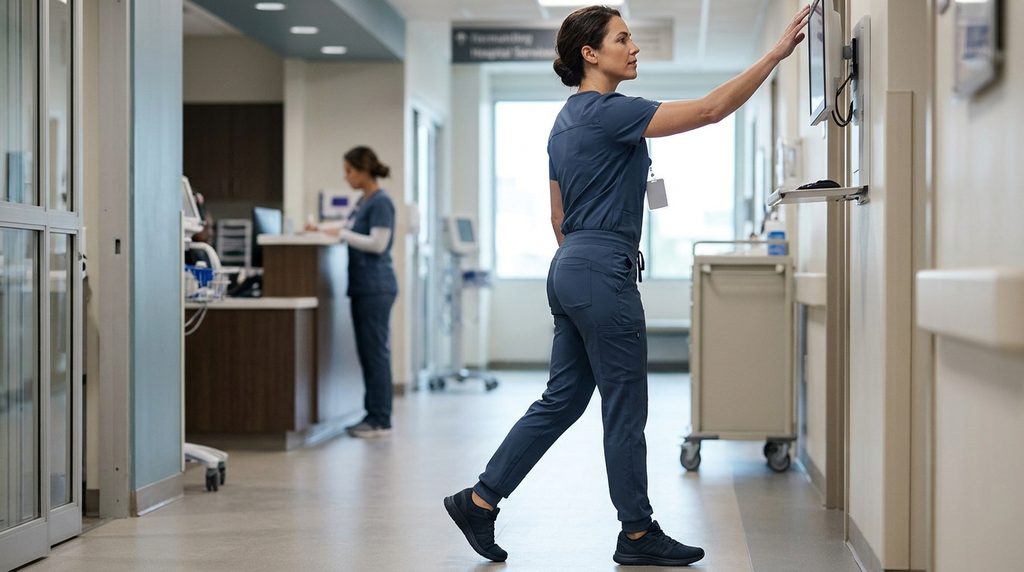
A professional who spends much of the day walking, bending, reaching, or assisting patients may benefit from fabrics and cuts that accommodate movement.
Useful characteristics can include:
- Stretch
- Mobility
- Breathability
- Comfortable Waistbands
- Appropriate Rise
- Flexible Fabric
- Secure Pockets
Professionals with less physical movement may have more flexibility to prioritize other features such as styling or layering.
What Scrubs Work Well for Active Clinical Roles?
Active clinical roles often require repeated movement throughout the shift.
Look for:
- Stretch Fabrics
- Comfortable Shoulder Construction
- Adequate Hip and Thigh Room
- Flexible Knees
- Secure Waistbands
- Practical Storage
Both joggers and traditional pants can work well when properly fitted.
The important factor is not the silhouette itself but whether the garment allows the required movement.
How Should Nurses Choose Scrubs for Busy Shifts?
Nurses often spend long periods standing and moving between different areas.
Depending on the role, useful features can include:
- Comfortable Stretch
- Breathability
- Practical Pockets
- Durable Construction
- Comfortable Waistband
- Appropriate Inseam
Professionals exploring medical scrubs for men or women’s medical scrubs should evaluate individual garments according to the demands of their specific work environment.
What Scrubs Work Well for Doctors?
Doctors can have very different work routines.
A physician working in a hospital may spend much of the day walking between departments, while another may spend more time in an examination room or office.
Potential priorities include:
- Professional Appearance
- Comfortable Movement
- Layering
- Appropriate Storage
- Breathability
- Workplace Requirements
The best uniform should reflect the actual working environment rather than the job title alone.
What Scrubs Work Well for Medical Students?
Medical students may move between classrooms, hospitals, clinics, and other clinical settings.
They should prioritize:
- Required Colors
- Comfortable Fit
- Easy Care
- Appropriate Coverage
- Mobility
- Practical Storage
Students should follow the dress requirements of their school or clinical placement before selecting specific styles.
How Should Scrubs Be Chosen for Hospital Environments?
Hospitals can involve significant movement, temperature variation, and long periods of standing.
A practical hospital uniform may benefit from:
- Durable Fabric
- Stretch
- Breathability
- Comfortable Waistband
- Useful Pockets
- Layering Options
A lightweight jacket can also be useful when moving between warmer and cooler areas.
How Should Scrubs Be Chosen for Outpatient Clinics?
Outpatient environments may involve a different balance of clinical activity and professional interaction.
Professionals may place greater emphasis on:
- Polished Fit
- Comfortable Fabric
- Professional Appearance
- Moderate Storage
- Coordinated Colors
- Layering
This does not mean functionality becomes less important.
Movement and comfort should still be evaluated.
What Scrubs Work Well in Primary Care?
Primary care professionals may spend time alternating between:
- Patient Rooms
- Examination Areas
- Documentation
- Administrative Tasks
- Walking
A versatile uniform can therefore be useful.
Consider scrub tops and pants that provide comfortable movement while maintaining a clean, professional appearance.
How Should Scrubs Be Chosen for Specialty Clinics?
Specialty clinics can have unique requirements.
Consider the specific tasks performed in the environment.
For example, a professional may need:
- Additional Storage
- Greater Mobility
- More Coverage
- Easier Layering
- Specific Colors
- Specialized Accessories
The clinical setting should determine the priority rather than choosing a uniform solely based on general trends.
How Does Temperature Affect Scrub Choice?
Temperature can significantly influence comfort.
A uniform suitable for a warm environment may feel very different in a cold clinical facility.
Consider:
- Fabric Weight
- Breathability
- Layering
- Sleeve Length
- Jacket Compatibility
The ability to add or remove a layer can make a uniform more adaptable.
What Scrubs Work Well in Warm Clinical Environments?
Professionals working in warm environments may prefer:
- Lightweight Fabric
- Breathable Construction
- Stretch
- Moisture Management
- Minimal Layering
However, lightweight does not automatically mean breathable.
Fabric construction and fit also influence how a garment feels.
What Scrubs Work Well in Cool Clinical Environments?
A moderate-weight base uniform combined with an appropriate jacket can provide flexibility.

Consider:
- Layer-Friendly Scrub Tops
- Comfortable Scrub Pants
- Lightweight Jackets
- Stretch
- Appropriate Coverage
Layering can be more versatile than choosing an excessively heavy base garment.
Why Are Scrub Jackets Useful?
A scrub jacket provides an additional layer without requiring a complete uniform change.

It can be useful in:
- Cool Hospitals
- Air-Conditioned Clinics
- Early Morning Shifts
- Transitional Areas
Look for:
- Comfortable Sleeves
- Shoulder Mobility
- Appropriate Length
- Practical Pockets
- Suitable Fabric Weight
Professionals can explore scrub jackets when a flexible layering option is needed.
Should Scrub Jackets Be Loose?
A jacket should provide enough room to fit comfortably over the scrub top without becoming excessively bulky.
Check the fit by:
- Raising the Arms
- Reaching Forward
- Sitting
- Bending
- Walking
The jacket should not restrict normal movement.
How Does Storage Affect Scrub Selection?
Storage requirements vary significantly between healthcare roles.
Some professionals carry only a few items, while others need multiple approved work essentials.
Before choosing pants, consider:
- Number of Items
- Item Size
- Accessibility
- Security
- Weight
More pockets do not automatically make a garment more useful.
When Are Cargo Scrub Pants Useful?
Cargo pants can be useful when additional storage is appropriate.
They may include:
- Side Cargo Pockets
- Front Pockets
- Back Pockets
- Utility Loops
- Secure Compartments
Professionals should still avoid carrying unnecessary weight.
Are Joggers Practical for Clinical Work?
Joggers can be practical when the workplace permits them.
They provide a tapered lower-leg silhouette and can work well with contemporary scrub tops.
Look for:
- Comfortable Waistband
- Appropriate Rise
- Adequate Thigh Room
- Knee Mobility
- Comfortable Ankle Cuff
- Useful Pockets
The taper should not compromise movement.
Are Straight-Leg Scrubs Still Practical?
Yes.
Straight-leg pants remain useful for professionals who prefer a traditional silhouette.
They can provide:
- Familiar Fit
- Open Lower Leg
- Easy Movement
- Straightforward Styling
The choice between straight-leg pants and joggers is primarily a matter of fit, function, workplace requirements, and personal preference.
How Should You Choose Scrubs for a Physically Demanding Role?
Start with movement.
Consider whether the uniform allows:
- Bending
- Reaching
- Squatting
- Walking
- Turning
- Sitting
Then evaluate fabric stretch, breathability, waistband comfort, and storage.
A garment that restricts movement can become increasingly uncomfortable over a long shift.
How Should You Choose Scrubs for a Less Active Role?
Professionals with less physical movement may have greater flexibility.
You can place more emphasis on:
- Fabric Feel
- Appearance
- Color
- Fit
- Layering
- Wrinkle Resistance
However, comfortable movement remains important even in less physically demanding roles.
How Does Shift Length Affect Scrub Choice?
The longer the shift, the more noticeable fabric and fit characteristics can become.
For extended shifts, prioritize:
- Comfortable Fit
- Breathability
- Stretch
- Waistband Comfort
- Fabric Weight
- Moisture Management
A garment should remain comfortable several hours after it is first put on.
What Should You Look for in Scrubs for 12-Hour Shifts?
A long-shift wardrobe should focus on minimizing unnecessary discomfort.
Consider:
- Stretch Fabric
- Breathability
- Comfortable Waistband
- Appropriate Rise
- Adequate Thigh Room
- Useful Pockets
- Suitable Inseam
The uniform should allow normal movement without requiring constant adjustment.
How Does Workplace Dress Code Affect Scrub Choice?
Dress codes can determine:
- Color
- Style
- Coverage
- Prints
- Layering
- Logo Requirements
Always follow workplace rules before personal preferences.
A comfortable uniform is only useful if it meets the requirements of the facility.
Why Should Color Requirements Be Checked First?
Healthcare organizations may use color to distinguish:
- Departments
- Roles
- Students
- Clinical Teams
Choosing the wrong color can make an otherwise suitable uniform inappropriate for work.
Confirm the required color before purchasing multiple garments.
Can Healthcare Professionals Wear Printed Scrubs?
Sometimes.
Printed scrubs can provide variety when workplace policies allow them.
If prints are permitted, a practical approach is to pair a printed top with a coordinating solid-color pant.
This keeps the overall outfit balanced.
How Does Fit Affect Work Environment Suitability?
Fit should reflect the movements required by the job.
A more tailored uniform may work well in a relatively controlled environment, while a highly active role may benefit from additional ease and stretch.
Regardless of setting, the uniform should allow:
- Comfortable Movement
- Appropriate Coverage
- Secure Fit
- Professional Appearance
What Should You Look for in Scrub Tops?
Evaluate:
- Shoulder Fit
- Chest or Bust Room
- Sleeve Mobility
- Torso Length
- Neckline
- Fabric Stretch
- Pocket Placement
A top should remain comfortable when reaching and bending.
What Should You Look for in Scrub Pants?
Evaluate:
- Waist
- Rise
- Hips
- Seat
- Thighs
- Inseam
- Leg Shape
- Pockets
The pants should remain secure while allowing natural movement.
How Does Fabric Affect Different Work Environments?
Fabric should match the conditions.
| Work Environment | Potential Fabric Priorities |
| Warm Clinical Setting | Lightweight, breathable, moisture management |
| Cool Hospital | Moderate weight, layering compatibility |
| Physically Active Role | Stretch, recovery, breathability |
| Office-Heavy Clinical Role | Drape, appearance, comfort |
| Long Shifts | Stretch, softness, breathability, durability |
| Frequent Washing | Durability, shape retention, easy care |
These are general considerations rather than universal rules.
How Does Scrub Fabric Affect Comfort?
Fabric can influence:
- Softness
- Stretch
- Breathability
- Weight
- Drape
- Moisture Management
A fabric that feels comfortable during a short fitting should also be evaluated for how it may perform during extended wear.
Is Stretch Important for Every Healthcare Professional?
Not necessarily to the same degree.
Professionals who frequently bend, reach, or walk may place greater value on stretch.
Someone with a less physically demanding role may prioritize other characteristics.
Stretch should be viewed as one part of the overall garment design.
Is Breathability Important for Every Work Environment?
It can be useful in most environments, but its importance varies.
A professional working in a warm, active environment may notice breathability more than someone working in a cool office.
Temperature and activity level should guide the decision.
How Important Is Durability?
Durability matters particularly for professionals who wear and wash their uniforms frequently.
Look for:
- Strong Seams
- Reliable Stitching
- Appropriate Fabric Construction
- Good Shape Retention
- Practical Care Requirements
A durable uniform can provide greater long-term value.
How Should You Choose Scrubs for Frequent Washing?
Choose garments whose care requirements fit your routine.
Consider:
- Washing Instructions
- Drying Requirements
- Color Retention
- Stretch Recovery
- Fabric Durability
The CDC recommends following manufacturer care instructions and applicable healthcare laundering requirements for healthcare textiles and clothing. CDC laundry and bedding guidance
How Can You Build a Workwear Rotation for Different Environments?
A small collection can cover multiple needs.
For example:
Core Set: Everyday scrub tops and pants.
Active Set: Stretch-focused pieces for demanding shifts.
Layering Set: Scrubs that work comfortably under a jacket.
Storage Set: Cargo pants for days when additional pockets are useful.
This approach can provide flexibility without requiring an excessively large wardrobe.
Should You Have Different Scrubs for Different Workdays?
You can, but you do not necessarily need to.
If the same garments work across your schedule, a single versatile rotation may be more efficient.
Separate workwear collections can make sense when your responsibilities vary significantly between shifts.
How Can You Choose Scrubs for Multiple Clinical Settings?
Look for adaptable garments.
A useful combination might include:
- Several Neutral Tops
- One or Two Pant Silhouettes
- One Lightweight Jacket
- A Practical Work Bag
Neutral colors and versatile silhouettes can make transitions between settings easier.
How Should Men Choose Scrubs for Their Work Environment?
Men should consider:
- Chest
- Shoulder Width
- Waist
- Seat
- Thigh
- Rise
- Inseam
Professionals exploring medical scrubs for men can then select fabric, pocket, and silhouette characteristics based on their clinical environment.
How Should Women Choose Scrubs for Their Work Environment?
Women should consider:
- Bust
- Shoulder Width
- Waist
- Hips
- Thighs
- Rise
- Inseam
Professionals exploring women’s medical scrubs should evaluate the individual garment’s cut and fabric rather than assuming all styles perform identically.
How Should You Choose Scrubs for Professional Appearance?
Professional appearance depends on more than the uniform style.
Consider:
- Correct Fit
- Cleanliness
- Appropriate Coverage
- Workplace-Approved Colors
- Good Garment Condition
- Coordinated Pieces
A simple uniform can look highly professional when it fits correctly and remains well maintained.
What Does Professional Medical Workwear Include?
Professional workwear can include:
- Scrub Tops
- Scrub Pants
- Scrub Jackets
- Lab Coats Where Required
- Appropriate Accessories
- Work Bags
The exact combination depends on the role and workplace.
Professionals evaluating professional medical uniforms should consider the entire workwear system rather than selecting garments independently.
How Should You Choose Scrubs for a Hospital-Based Role?
Hospital-based professionals may benefit from:
- Durable Fabrics
- Comfortable Stretch
- Practical Pockets
- Breathability
- Layering Options
- Appropriate Coverage
Because hospital environments can vary considerably, adaptable garments can be particularly useful.
How Should You Choose Scrubs for an Office-Based Medical Role?
Office-based medical professionals may have more flexibility to emphasize:
- Professional Appearance
- Tailored Fit
- Comfortable Fabric
- Color Coordination
- Layering
Storage and mobility may still matter depending on the role.
How Should You Choose Scrubs for Pediatric Work?
Pediatric environments may involve frequent movement and interaction.
Depending on workplace policy, professionals may consider:
- Comfortable Stretch
- Durable Fabric
- Practical Pockets
- Appropriate Prints
- Easy-Care Construction
Any prints or colors should remain consistent with workplace requirements.
How Should You Choose Scrubs for Surgical or Procedure-Oriented Work?
Requirements vary by facility and role.
Professionals should follow the specific policies regarding:
- Color
- Garment Type
- Coverage
- Fabric
- Changing Procedures
- Protective Requirements
General scrub preferences should never override facility-specific protocols.
How Should You Choose Scrubs for Clinical Students?
Clinical students should begin with the requirements of their educational program and placement site.
Then consider:
- Fit
- Comfort
- Easy Care
- Durability
- Mobility
- Appropriate Storage
A small, reliable rotation is usually more useful than purchasing a large number of specialized garments.
How Should You Choose Scrubs for Commuting Professionals?
Commuters may want to consider how the uniform and accessories will be transported.
A practical workwear system may include:
- A Dedicated Work Bag
- A Spare Uniform
- A Lightweight Jacket
- Protected Equipment Storage
Professionals can evaluate scrub bags for nurses based on the amount of equipment and clothing they need to transport.
When Is a Medical Backpack Useful?
A medical backpack can be useful when professionals need hands-free transportation or additional storage.
It can accommodate:
- Spare Scrubs
- Work Equipment
- Personal Items
- Accessories
- Documents
A large medical backpack should be selected according to actual carrying requirements rather than maximum capacity alone.
How Should You Choose Scrubs for a Long Commute?
Consider garments that resist excessive wrinkling and remain comfortable while traveling.
A separate work bag can also help keep uniforms organized.
Avoid overloading the bag because unnecessary weight can make commuting less comfortable.
How Can You Choose Scrubs for a Changing Work Environment?
Versatility becomes especially important.
Look for:
- Breathable Base Layers
- Stretch
- Easy Layering
- Neutral Colors
- Flexible Pant Styles
A lightweight jacket can help manage temperature changes without requiring a different uniform.
What Are Common Mistakes When Choosing Scrubs for Work?
Choosing Based Only on Appearance
A stylish garment may not meet the demands of the job.
Ignoring the Work Environment
Temperature and activity level can significantly affect comfort.
Overlooking Storage
A lack of practical pockets can become inconvenient during a long shift.
Ignoring Fit
Even high-quality fabric will not compensate for poor fit.
Buying Too Many Specialized Pieces
A versatile wardrobe can often handle multiple work situations.
Forgetting Workplace Requirements
Color and style rules should always be checked first.
How Can You Create a Workwear Checklist?
Before buying, ask:
- What activities will I perform?
- How long are my shifts?
- Is my environment warm or cool?
- Do I need additional storage?
- Are specific colors required?
- Do I need a jacket?
- Do I need a more active or relaxed fit?
- How frequently will I wash the garment?
- Does it coordinate with my current wardrobe?
This checklist can make the purchasing process more deliberate.
How Can You Build a Versatile Scrub Wardrobe?
Start with a small group of dependable garments.
For example:
| Garment | Quantity | Purpose |
| Scrub Tops | 3–4 | Core rotation |
| Scrub Pants | 3–4 | Daily work |
| Cargo Pants | 1 | Additional storage |
| Joggers | 1 | Alternative silhouette |
| Scrub Jacket | 1 | Layering |
| Work Bag | 1 | Transportation |
The appropriate quantity depends on shift frequency and laundry routine.
Should You Prioritize Versatility or Specialization?
For most professionals, versatility is a useful starting point.
A garment that works in several situations can provide greater value than a highly specialized garment used only occasionally.
Specialized pieces become more useful when your work environment has specific demands that standard garments cannot meet.
How Can You Choose the Right Scrub Wardrobe for Your Environment?
The simplest method is to work backward from your daily tasks.
Environment → Activity → Temperature → Storage → Dress Code → Fit → Fabric → Style
This sequence helps prevent appearance from becoming the primary decision factor.
Work Environment Scrub Selection Checklist
| Factor | Questions to Ask |
| Activity | How much walking, bending, and reaching is required? |
| Temperature | Is the environment warm, cool, or variable? |
| Shift | How many hours will the uniform be worn? |
| Storage | How many approved items need to be carried? |
| Fit | Does the garment allow normal movement? |
| Fabric | Is it breathable, durable, and comfortable? |
| Layering | Will a jacket be necessary? |
| Color | Does it meet workplace requirements? |
| Care | Can it be washed and maintained easily? |
| Durability | Can it handle repeated use? |
| Style | Does the silhouette suit the workplace? |
| Versatility | Can the garment work across multiple settings? |
Frequently Asked Questions
How do I choose scrubs for my work environment?
Start by evaluating activity level, temperature, shift length, storage requirements, workplace dress code, and required coverage. Then choose fabric, fit, pant style, and layering pieces that match those conditions.
What scrubs are best for nurses?
Nurses may benefit from comfortable, durable scrubs with useful stretch, breathability, practical pockets, and a secure fit. The ideal features depend on the specific nursing environment and duties.
What scrubs are best for long shifts?
For long shifts, prioritize comfortable fit, stretch, breathability, suitable fabric weight, waistband comfort, practical storage, and durability. The uniform should remain comfortable after several hours of movement.
Are jogger scrubs good for clinical work?
They can be, provided the workplace permits them and the garment allows comfortable movement. Look for adequate room through the hips, thighs, and knees and a comfortable tapered lower leg.
Are cargo scrubs better for active healthcare workers?
Cargo scrubs can be useful when additional storage is needed. They are not automatically better for active workers, however. Mobility, fit, fabric, and pocket weight should all be considered.
Are straight-leg scrubs still practical?
Yes. Straight-leg pants remain a practical option for professionals who prefer a traditional silhouette and comfortable lower-leg room. They can be used across many healthcare environments.
How should I choose scrubs for a hospital?
Consider durable fabric, stretch, breathability, practical pockets, comfortable fit, and layering options. Hospital environments can vary in temperature and activity, so versatile garments can be useful.
How should I choose scrubs for a clinic?
Consider the balance of clinical activity and professional appearance. A polished fit, comfortable fabric, practical storage, and appropriate layering can all be useful in outpatient environments.
What scrubs are best for warm environments?
Lightweight, breathable fabrics with useful stretch and moisture-management characteristics can be suitable for warm environments. Personal comfort and the specific clinical setting should guide the choice.
What scrubs are best for cold environments?
A comfortable base uniform combined with a suitable scrub or warm-up jacket can provide flexibility in cooler environments. Layering is often more adaptable than relying on a heavy base garment.
Do I need a scrub jacket?
Not necessarily. A scrub jacket is useful when the workplace is cool, temperature varies, or additional coverage is needed. Whether it is necessary depends on the environment and dress code.
How important are pockets in medical scrubs?
Pockets are important when they match the professional’s actual work requirements. Consider accessibility, size, security, and weight rather than simply choosing the garment with the most pockets.
What should I carry in my scrub pockets?
Carry only necessary and workplace-approved lightweight items. Excessive pocket weight can affect garment balance, waistband position, and comfort.
Should medical scrubs be loose or fitted?
Neither extreme is universally ideal. Scrubs should provide enough ease for movement without excessive fabric. The best fit depends on the garment design, body proportions, and work requirements.
How does fabric affect scrub performance?
Fabric influences stretch, breathability, softness, weight, durability, moisture management, and shape retention. The right characteristics depend on the work environment and activity level.
How important is stretch in medical scrubs?
Stretch can support movement during walking, bending, reaching, sitting, and squatting. It should complement proper sizing rather than compensate for a garment that is too small.
How should I choose scrubs for men?
Consider chest, shoulders, waist, seat, thigh, rise, and inseam measurements. Then select fabric and garment features based on the specific work environment.
How should I choose women’s medical scrubs?
Consider bust, shoulders, waist, hips, thighs, rise, and inseam. The top and bottom may require different sizes, and fabric stretch should be evaluated alongside the garment’s cut.
How many scrub sets should I own?
The appropriate number depends on shift frequency and laundry routine. Three to five complete combinations can provide a useful starting point for many regular-shift professionals, but individual requirements vary.
Can I use the same scrubs in different healthcare environments?
Often, yes, if the garments meet each workplace’s requirements. Versatile colors, comfortable fits, and adaptable fabrics can make it easier to use the same wardrobe across multiple settings.
How should I choose professional medical uniforms?
Start with workplace requirements, then evaluate fit, mobility, fabric, storage, layering, durability, and care. A professional uniform should support the actual work rather than simply look polished.
How should I care for medical scrubs?
Follow the manufacturer’s care instructions for each garment. The CDC recommends following manufacturer care instructions and applicable healthcare laundering requirements for healthcare textiles and clothing.
What is the best way to build a healthcare workwear wardrobe?
Build around your actual work environment. Start with several versatile tops and pants, then add a jacket, cargo pants, specialized garments, or accessories only when your work requires them.