
Swimmer injury claims involving boats in New York may involve boat strikes, propeller injuries, unsafe wake, poor lookout, excessive speed, intoxicated operation, rental vessels, personal watercraft, public beaches, marinas, docks, lakes, bays, rivers, or marked swimming areas. These claims can be serious because swimmers have little protection and may be difficult for boat operators to see. People reviewing injury options after a water-related incident may use a boating accident lawyer Long Island resource to understand how liability, evidence, insurance, and damages are generally evaluated.
Quick Answer
A swimmer injury claim involving a boat usually depends on where the swimmer was, who operated the vessel, who owned the vessel, whether speed or lookout failures contributed, whether the operator followed New York boating rules, whether alcohol or distraction was involved, whether a rental company or marina played a role, and what evidence connects the vessel to the injury. Important evidence may include accident reports, photos, videos, witness statements, vessel registration, operator information, GPS data, weather records, marina or beach records, medical records, and insurance documents.
Key Takeaways
- Swimmer injury claims may involve boat operators, vessel owners, rental companies, marinas, public entities, personal watercraft riders, charter operators, or product manufacturers.
- New York Navigation Law § 45 requires vessels to be operated carefully and prudently and restricts unreasonable speed under existing conditions and hazards.
- New York boating accident reporting rules may require a written report within five days after certain accidents involving death, injury, disappearance under water, or property damage above the statutory threshold.
- New York State Parks states that motorized and non-motorized vessels must have one life jacket for each person aboard, and boating accidents must be reported to New York State Parks within five days when reporting criteria are met.
- Public beaches, public docks, municipal marinas, state parks, or government-controlled waterfront areas may involve shorter notice rules.
- Evidence should be preserved quickly because vessels may be repaired, surveillance may be overwritten, weather changes, and witnesses may leave the area.
Why Swimmer Boat Injury Claims Are Different
Swimmer injury claims are different from ordinary boating claims because the injured person may not have been on a vessel at all. A swimmer may be in open water, near a beach, beside a dock, close to a moored boat, near a marina, in a lake, in a bay, or near a launch area.
These claims may involve:
- Boat operator conduct
- Vessel speed
- Poor lookout
- Propeller danger
- Marked swimming areas
- Dock or marina supervision
- Rental company instruction
- Beach rules
- Visibility issues
- Alcohol or drug impairment
- Emergency response
- Insurance coverage
The central question is usually whether a boat operator, owner, marina, rental company, public entity, or another party acted unreasonably and caused or worsened the swimmer’s injury.
Common Swimmer Injury Scenarios Involving Boats
Swimmer injuries can happen in many boating environments. The location and activity often determine what evidence is needed.
Common scenarios include:
- A boat strikes a swimmer in open water
- A propeller injures a person near the stern
- A personal watercraft hits a swimmer
- A rental boat enters a swimming area
- A swimmer is injured near a docked boat
- A passenger falls overboard and is struck
- A swimmer is injured by unsafe wake near shore
- A child swimmer is injured near a public beach
- A swimmer is struck while boarding or exiting a vessel
- A boat backs up without proper lookout
- A swimmer is injured near a marina or launch ramp
- A drowning or near-drowning occurs after vessel movement
Each scenario may involve different rules, witnesses, insurance policies, and responsible parties.
Boat Operator Responsibility
Boat operators must account for nearby people, vessels, docks, shore areas, visibility, wake, weather, and waterway traffic. A swimmer may be hard to see, but that does not automatically excuse unsafe operation.
Operator negligence may involve:
- Poor lookout
- Excessive speed
- Unsafe backing
- Operating too close to shore
- Ignoring marked swimming areas
- Distracted operation
- Boating while impaired
- Failure to slow near docks or beaches
- Unsafe wake near swimmers
- Failure to warn passengers before movement
- Failure to stop after impact
- Delayed emergency response
New York Navigation Law § 45 addresses careful and prudent vessel operation and prohibits operation at a speed greater than reasonable and prudent under existing conditions and hazards.
Poor Lookout and Visibility Issues
Visibility is often central in swimmer injury claims. A swimmer’s head may be low in the water, waves may block visibility, glare may reduce sightlines, or other boats may distract the operator.
Visibility evidence may include:
- Time of day
- Sun glare
- Weather conditions
- Water traffic
- Vessel speed
- Operator position
- Passenger statements
- Witness observations
- Photos or videos
- GPS location
- Distance from shore
- Marked swimming area signs
- Buoys or ropes
A related boat accident attorney guide may help explain why operator conduct, vessel control, ownership, and accident evidence often need to be reviewed together.
Speed Near Shore, Docks, and Swimming Areas
Speed can be especially important when a boat is near swimmers, shore, docks, piers, floats, anchored vessels, or marinas. A vessel traveling too fast may create unsafe wake, reduce reaction time, or make it harder to avoid people in the water.
Speed-related evidence may include:
- GPS data
- Witness statements
- Passenger accounts
- Video footage
- Accident report notes
- No-wake signage
- Marina camera footage
- Beach or dock rules
- Vessel damage
- Waterway maps
New York Navigation Law § 45 includes requirements involving careful operation, reasonable speed, and speed restrictions near certain shore and dock areas.
Propeller Injury Claims
Propeller injuries can be severe because they may involve deep cuts, fractures, amputations, scarring, infection risk, disability, or wrongful death. These claims may involve the operator’s lookout, engine status, boarding procedures, passenger instructions, and whether the vessel was shifted into gear while someone was nearby.
Propeller injury questions may include:
- Was the engine running while people were in the water?
- Did the operator know a swimmer was nearby?
- Was the operator backing up?
- Were passengers instructed to stay away from the stern?
- Was a person boarding or reboarding?
- Was alcohol or distraction involved?
- Was the engine cut-off switch used when required?
- Did delayed rescue worsen the injury?
- Was the vessel rented or privately owned?
Medical records, emergency response records, photos, witness statements, and vessel evidence may be critical in these claims.

Personal Watercraft and Swimmer Injuries
Personal watercraft can create serious risks for swimmers because they may move quickly, turn sharply, and operate near recreational areas. A swimmer injury involving a personal watercraft may involve speed, wake-jumping, poor lookout, inexperience, rental instruction, or operation too close to shore.
Personal watercraft evidence may include:
- Operator age
- Safe boating certificate information
- Rental agreement
- Safety instruction checklist
- GPS or tracking data
- Life jacket records
- Engine cut-off lanyard evidence
- Witness statements
- Photos of the craft
- Accident report
- Insurance documents
New York State Parks boating guidance states that all motorized vessel operators must complete a state-approved safe boating course under Brianna’s Law, and the agency also provides personal watercraft safety guidance for operators and passengers.
Rental Boat Swimmer Injury Claims
Rental boat claims may involve the renter, operator, rental company, marina, vessel owner, or another boater. A rental company is not automatically responsible for every swimmer injury, but its conduct may matter when instruction, equipment condition, operating boundaries, or safety warnings are disputed.
Rental-related issues may include:
- Poor instruction for inexperienced operators
- Failure to explain no-swim or no-wake zones
- Failure to identify swimming areas
- Rental to an unqualified operator
- Missing operating boundary map
- Incomplete safety checklist
- Defective steering or throttle
- Failure to explain emergency procedures
- Not preserving rental records after the incident
Rental evidence may include agreements, safety instruction forms, operating maps, employee statements, maintenance logs, GPS data, incident reports, and insurance documents.
Marina, Dock, and Launch Area Claims
Some swimmer injuries happen near docks, marinas, public launches, fuel docks, waterfront restaurants, or rental staging areas. These cases may involve boating negligence and premises liability issues at the same time.
Marina and dock issues may include:
- Poorly marked swimming restrictions
- Unsafe vessel movement near swimmers
- Lack of staff supervision
- Crowded launch areas
- Poor lighting
- Defective ladders
- Slippery docks
- Unsafe rental staging
- Failure to warn about boat traffic
- Missing emergency equipment
- Delayed rescue response
A premises liability attorney resource may help explain how property control, maintenance, warning signs, inspection records, and notice evidence can overlap with waterfront injury claims.
Public Beach and Public Waterfront Claims
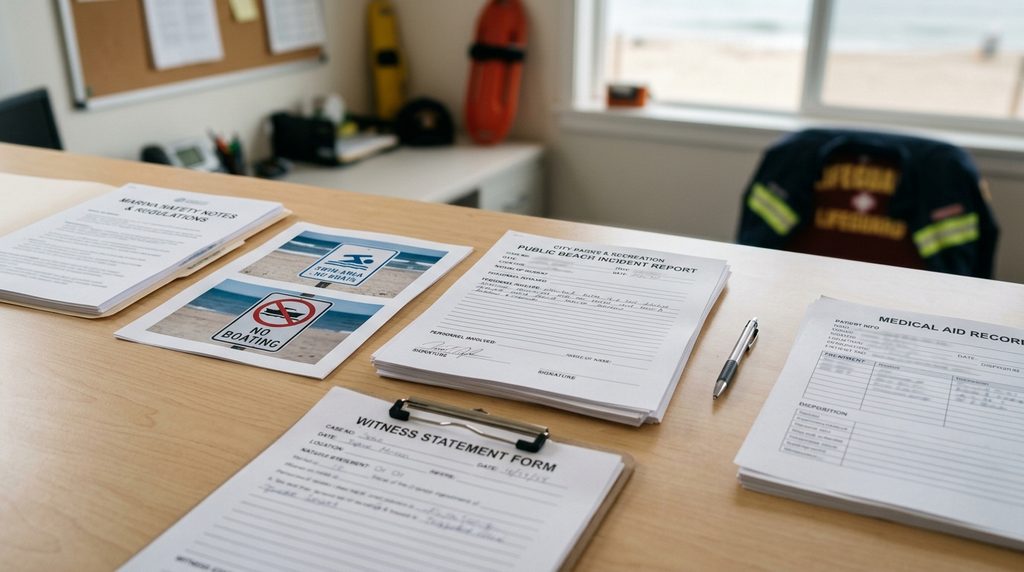
Swimmer injuries may happen near public beaches, public parks, state facilities, municipal marinas, public docks, or public waterfront areas. These claims require careful location review because public entity rules may affect deadlines, notice requirements, and responsible parties.
Public waterfront evidence may include:
- Exact location
- Public agency name
- Beach or park signage
- Lifeguard records
- Incident reports
- Maintenance records
- Boating restriction signs
- Prior complaints
- Photos and videos
- Witness statements
- Surveillance footage
- Emergency response timeline
Public entity involvement should be identified early because notice deadlines may arrive before an injured person expects them.
Child Swimmer Injury Claims
Child swimmer injuries involving boats may require special review because children depend on adults, operators, rental staff, camp staff, lifeguards, and property owners for safety decisions. A child may not understand boat traffic, propeller danger, wake, current, or restricted swimming areas.
Child-related questions may include:
- Was the child supervised?
- Was the swimming area marked?
- Was the boat operating too close?
- Did adults know boats were nearby?
- Were warnings clear?
- Was a rental or camp activity involved?
- Was the child wearing a life jacket when appropriate?
- Was rescue delayed?
- Were medical records preserved?
- Was settlement approval required later?
New York State Parks boating guidance states that children under 12 must wear a Coast Guard-approved life jacket in covered boating situations unless an exception applies, and it also emphasizes life jackets for children during open-water recreation.
Alcohol or Drug Impairment
Alcohol or drug impairment can be important in swimmer injury claims. Impairment may affect reaction time, speed control, lookout, judgment, emergency response, and the ability to avoid swimmers.
Alcohol-related evidence may include:
- Marine patrol reports
- Police reports
- Chemical test results
- Witness statements
- Passenger accounts
- Photos or videos
- Restaurant or marina receipts
- Operator admissions
- Emergency responder observations
- Social media posts
An impaired operator may miss a swimmer, enter a restricted area, travel too fast near shore, back up unsafely, or delay rescue after an incident.
Unsafe Wake Near Swimmers
Wake can injure swimmers even without direct vessel contact. A large or repeated wake may push swimmers into docks, rocks, ladders, other vessels, shallow areas, or currents. Wake may also create panic, fatigue, or drowning risk.
Wake-related swimmer evidence may include:
- Witness statements
- Video footage
- Vessel identification
- Distance from swimmer
- No-wake signs
- Waterway maps
- Marina footage
- GPS data
- Weather and wave conditions
- Medical records
Wake disappears quickly, so early witness and video evidence can be especially important.
Defective Boat Equipment and Swimmer Injuries
A swimmer injury may involve defective equipment or mechanical failure. A boat may lose steering, fail to stop, shift unexpectedly, back up improperly, or have a malfunctioning engine cut-off device.
Equipment issues may include:
- Steering failure
- Throttle malfunction
- Engine control problem
- Defective propeller guard or safety component
- Faulty engine cut-off switch
- Poor maintenance
- Rental company inspection failures
- Marina repair errors
- Product defects
- Missing warnings or instructions
If equipment failure is suspected, the vessel and failed parts should be preserved when possible before repair, replacement, or disposal.
Accident Reporting After a Swimmer Boat Injury
A swimmer injury involving a vessel may need to be reported if it meets New York reporting rules. New York Navigation Law § 47-B requires written reporting within five days after certain vessel accidents involving death, injury, disappearance under water, or property damage to any one person above $1,000.
A boating accident report may document:
- Date and time
- Waterway or beach location
- Vessel operator
- Vessel owner
- Vessel registration
- Swimmer information
- Injury details
- Property damage
- Weather and water conditions
- Witnesses
- Emergency response
- Law enforcement involvement
A report is not the complete claim, but it can create an important official record before memories fade and vessels are repaired.
Evidence That Can Strengthen a Swimmer Injury Claim
Swimmer injury claims often depend on early evidence. The water conditions may change, witnesses may leave, boats may be moved, and digital footage may be overwritten.
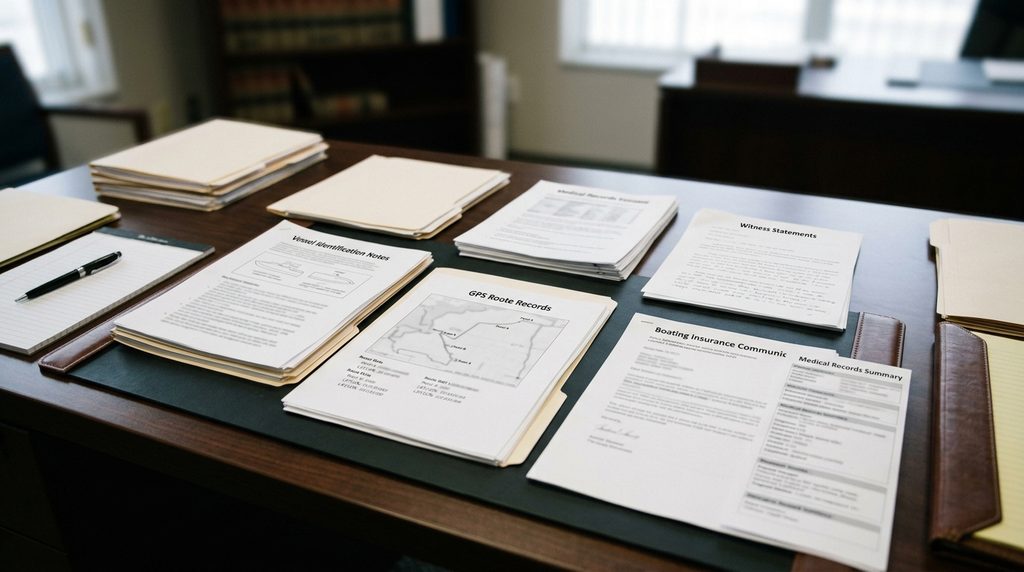
Helpful evidence may include:
- Boating accident report
- Police or marine patrol report
- Photos and videos
- Vessel registration information
- Operator information
- Vessel owner information
- Witness names and contact details
- Passenger statements
- Swimmer statements when available
- Marina or beach incident reports
- Lifeguard records
- GPS or chartplotter data
- Phone location records
- Weather and water condition records
- No-wake or swim-area signage photos
- Rental agreements
- Maintenance records
- Medical records
- Insurance documents
For broader documentation planning, readers may review how evidence for personal injury claims can help connect accident facts, injuries, responsible parties, and damages.
Medical Records and Damages
Medical records are central in swimmer injury claims because injuries may involve impact trauma, propeller wounds, drowning risk, oxygen deprivation, hypothermia, infection, scarring, or psychological trauma.
Common injuries may include:
- Lacerations
- Propeller injuries
- Fractures
- Concussions
- Traumatic brain injuries
- Neck injuries
- Back injuries
- Shoulder injuries
- Internal injuries
- Drowning-related injuries
- Near-drowning complications
- Hypothermia
- Infection
- Scarring or disfigurement
- Psychological trauma
- Wrongful death in severe cases
Medical documentation may include emergency records, hospital notes, imaging, surgery records, wound care records, specialist notes, therapy records, prescriptions, work restrictions, bills, and future care recommendations.
Insurance Coverage in Swimmer Boat Injury Claims
Insurance coverage may depend on who operated the boat, who owned it, where the injury happened, whether the vessel was rented, whether a marina or public entity was involved, and whether a defect contributed.
Potential insurance sources may include:
- Boat insurance
- Vessel owner policy
- Homeowner’s insurance
- Umbrella coverage
- Rental company insurance
- Marina liability insurance
- Charter or commercial vessel coverage
- Product liability coverage
- Public entity coverage in limited cases
Insurance companies may dispute vessel identity, operator permission, swimmer location, comparative fault, intoxication, policy exclusions, injury severity, and whether the boat caused the injury.
Comparative Fault and Defense Arguments
Defendants and insurers may argue that the swimmer contributed to the accident. They may claim the swimmer was outside a marked area, difficult to see, swimming near boat traffic, ignoring posted warnings, swimming after dark, or failing to use safety equipment.
These arguments do not automatically defeat a claim. Important questions include:
- Was the operator keeping proper lookout?
- Was the boat too close to swimmers or shore?
- Was speed reasonable for the area?
- Were warnings or boundaries clear?
- Was the swimmer in a permitted area?
- Did a rental company give proper instructions?
- Did the marina or public facility control the hazard?
- Was alcohol or distraction involved?
- Did delayed rescue worsen the outcome?
New York comparative negligence principles may reduce damages if the injured person is assigned a share of fault, but the full evidence should be reviewed before accepting any blame argument.
Public Entity Notice Issues
Some swimmer boat injury claims involve public beaches, municipal marinas, public docks, public launches, state parks, public vessels, public authorities, or government-controlled waterfront areas. These cases may involve special notice requirements.
New York General Municipal Law § 50-E generally requires a notice of claim within 90 days when notice is required for certain tort claims against public corporations. The notice generally must include details such as the nature of the claim, time, place, manner of occurrence, and claimed injuries or damages as far as practicable.
Public entity evidence may include:
- Exact location
- Public agency name
- Facility signage
- Incident reports
- Beach or marina records
- Lifeguard records
- Prior complaints
- Photos and videos
- Witness statements
- Surveillance footage
- Emergency response documents
The exact accident location should be documented early because the responsible public agency may not always be obvious.
Deadlines for Swimmer Injury Boat Accident Claims
Deadlines depend on the claim type and responsible party. The New York Courts statute of limitations timetable lists three years for many negligence-based personal injury claims, two years for wrongful death claims, and three years for product liability matters.
Practical deadlines may arrive sooner. Accident reporting, insurance notice, public entity notice rules, surveillance preservation, vessel repair, rental records, GPS data, and witness identification can create urgency before the lawsuit deadline.
Common Mistakes After a Swimmer Boat Injury
Some mistakes can make a swimmer injury claim harder to prove.
Common mistakes include:
- Not getting medical care promptly
- Not reporting a qualifying boating accident
- Not identifying the vessel operator
- Not identifying the vessel owner
- Not collecting witness information
- Not photographing the boat, location, and signage
- Not preserving phone videos or GPS data
- Not documenting weather and water conditions
- Not saving marina, rental, or beach records
- Not requesting surveillance footage quickly
- Giving broad insurance statements before facts are clear
- Accepting a quick settlement before injuries are fully known
- Missing public entity notice deadlines
A strong claim usually depends on prompt medical care, early reporting, preserved evidence, witness statements, vessel identification, and organized records.
When Legal Guidance May Be Useful
Legal guidance may be useful when a swimmer injury involves a boat strike, propeller injury, personal watercraft, rental boat, public beach, marina, unsafe wake, child injury, drowning risk, disputed vessel identity, defective equipment, or unclear insurance coverage.
A swimmer injury boat claim may require review of vessel operation, owner permission, swimmer location, speed, lookout, accident reports, medical records, GPS data, witness statements, insurance policies, public entity rules, and deadlines.
People researching local support may review a Farmingdale legal office location when looking for Long Island boating accident claim information. Publicly available personal injury case results may provide general context, although every claim depends on its own facts, evidence, injuries, insurance coverage, and applicable law.
FAQs About Swimmer Injury Claims Involving Boats
Can a swimmer file a claim after being hit by a boat?
Yes. A swimmer may have a claim if a boat operator, vessel owner, rental company, marina, public entity, or another party acted negligently and caused or contributed to the injury. Evidence must connect the vessel or unsafe condition to the harm.
What evidence is important after a swimmer is injured by a boat?
Important evidence may include boating accident reports, photos, videos, witness statements, vessel registration, operator and owner information, GPS data, marina or beach records, weather conditions, medical records, and insurance letters.
Can a boat operator be liable for a propeller injury?
Yes. A boat operator may be reviewed if poor lookout, unsafe backing, running the engine near swimmers, failing to warn passengers, intoxication, distraction, or delayed emergency response contributed to a propeller injury.
What if the swimmer was outside a marked swimming area?
That fact may matter, but it does not automatically end the claim. The full evidence may still show unsafe speed, poor lookout, intoxication, rental company negligence, unclear signage, marina issues, or other contributing factors.
How long does someone have to file a swimmer boat injury claim in New York?
The deadline depends on the claim type and responsible party. Many New York negligence and product liability claims have a three-year limitations period, but wrongful death, public entity notice, insurance notice, accident reporting, and evidence preservation issues may involve shorter timelines.
Final Thoughts
Swimmer injury claims involving boats in New York require careful investigation because the case may involve vessel operation, poor lookout, unsafe speed, propeller danger, rental records, marina conduct, public property, life jacket issues, emergency response, or disputed swimmer location. The strongest claims usually depend on prompt medical care, accident reports, vessel identification, photos, witness statements, GPS data, medical records, insurance review, and a clear timeline showing how the injury happened.